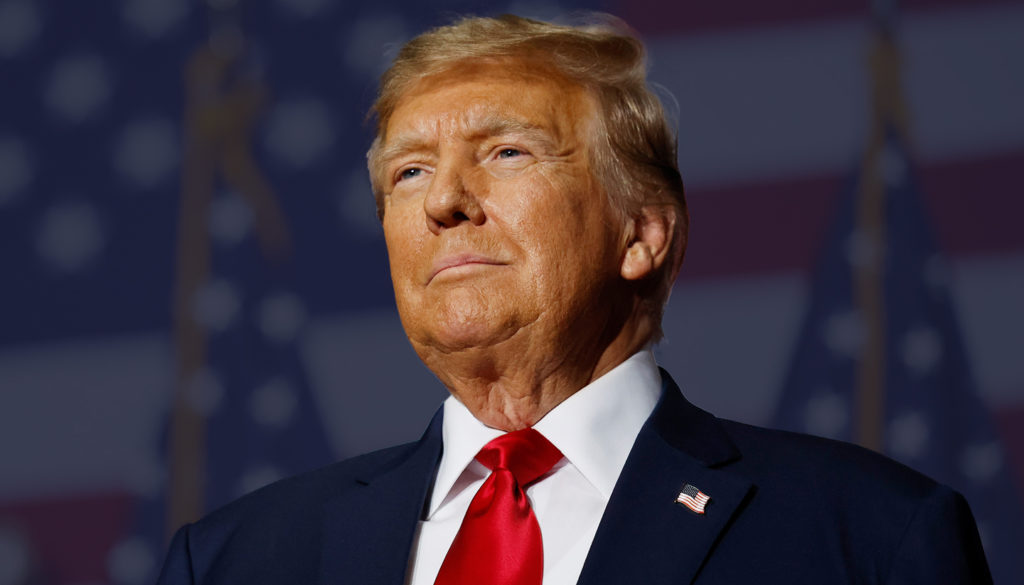
Trump Warns India: US President Donald Trump has once again placed India at the centre of the United States’ evolving trade agenda. During a detailed interaction at the White House, Trump warned that he may introduce fresh tariffs on agricultural imports, particularly rice from India, if ongoing trade discussions fail to produce what he considers balanced outcomes. The remarks came as he rolled out a multi-billion-dollar farm relief package for American farmers, linking the assistance directly to the challenges posed by foreign imports. By making India a prominent example in his concerns, Trump revived an ongoing debate about agricultural trade, import competition, and global market fairness.
The comments quickly gained attention across international media and political circles because they echoed familiar themes from Trump’s earlier trade policy positions, including his repeated claims that foreign suppliers have taken advantage of the United States. With India being one of the world’s largest exporters of rice, and having a substantial presence in the American retail rice market, the reaction from stakeholders in both nations was immediate and varied. The new phase of tariff discussions is expected to shape India-US agricultural dynamics in the coming months, especially in sectors—such as basmati rice, non-basmati rice, spices, and marine goods—where trade volumes have steadily increased.
This report examines Trump’s recent remarks, their context, the reactions they generated, and the possible implications for both countries’ agricultural industries. It also explores how the focus keyphrase “Trump warns India” plays a role in shaping the interpretation of these developments.
Why Trump Warns India Over Agricultural Imports
The statement “Trump warns India” gained prominence after he pointed to rice imports during a discussion with American farmers. Trump suggested that Indian rice exporters were “dumping” products into the US market at prices that were harming domestic producers. While the term “dumping” has specific international trade law definitions, Trump used it to broadly describe what he considered unfair competition.
A Louisiana rice producer present at the meeting said that imported Indian rice had significantly disrupted the southern US rice-growing economy. In response, Trump stated that tariffs could solve the issue “in two minutes,” reinforcing his belief in tariff-based remedies.
His remarks implied three key arguments:
- Imports from India are affecting US producers.
He suggested that American farmers were losing market share due to cheaper alternatives entering the country. - Tariffs could quickly correct market imbalances.
Trump argued that aggressive tariff use would protect American growers. - India’s market position in the US rice sector is strong.
After learning that Indian companies owned two of the biggest rice brands in the US retail market, his response indicated an intention to act swiftly if needed.
These points show why Trump warns India has become a headline topic in global trade discussions.
US Farm Relief Package and Its Link to Tariffs
Trump announced a $12 billion economic assistance package for American farmers, asserting that the funds would come from tariff revenues. The relief package was presented as a measure to stabilise the agricultural economy after what he repeatedly described as inherited inflation and depressed commodity prices.
He emphasised:
- Farmers are an indispensable national asset.
- Tariff policies generate the revenue needed to support them.
- Foreign competitors have exploited the US market.
His administration framed tariffs not only as trade tools but also as revenue-generating mechanisms that can be redirected to boost domestic industries. This context provided additional clarity on why Trump warns India became a focal statement in the wider discussion.
Reaction to Trump’s Remarks in the US Agricultural Sector
American farmers, particularly rice growers in states such as Louisiana, Arkansas, Texas, and Mississippi, have faced rising competition from imported rice varieties. Producers argue that:
- Indian rice prices are often lower due to government subsidies.
- Basmati and non-basmati varieties from India have gained strong consumer popularity.
- Southern US producers struggle to compete in price-sensitive retail environments.
For these farmers, Trump’s warning to India appeared to be a welcome signal. Many said they hoped forthcoming tariffs would protect local production, increase price stability, and create fairer market conditions.
At the same time, industry experts cautioned that tariffs could have unintended consequences:
- Higher prices for US consumers
- Retaliatory action from exporting countries
- Disruptions in long-term supply chains
- Impact on retailers dependent on imported varieties
These concerns underline the complexity of implementing tariffs in a globally integrated agricultural market.
How India Responded to the “Trump Warns India” Remarks
While the Indian government did not issue an immediate formal response, trade analysts and agricultural export associations in India reacted with cautious interest. India is a major player in the global rice market and has cultivated strong export relationships with dozens of countries, including the United States.
Experts in India highlighted several points:
1. India’s rice exports follow international trade norms.
Exporters argued that Indian rice is priced based on global supply-and-demand factors, not dumping practices.
2. India already faces quality-related and regulatory checks.
The US imposes strict standards on imported agricultural products, including rice.
3. Frequent tariff threats could create uncertainty for exporters.
Indian exporters said that uncertainty in the US market could push them to strengthen ties with Europe, the Middle East, and Africa.
4. India-US agricultural trade is not limited to rice.
Both countries benefit from a wide spectrum of exchanges, including:
- India exporting:
basmati rice, non-basmati rice, spices, seafood, processed foods - India importing from the US:
almonds, cotton, pulses, horticultural products
Trade experts emphasised that unexpected tariff impositions could disrupt this balanced ecosystem.
Trump Warns India: What “Dumping” Means in Trade Discussions
The term dumping is often used in political debates, but in trade law, it refers to selling a product in a foreign market at a price lower than its domestic price or lower than the cost of production.
For a dumping case to be formally recognised:
- A government must file a complaint with the WTO.
- Evidence must show harm to domestic industry.
- An independent investigation must confirm price distortions.
At present, the US has not formally filed such a case against Indian rice exporters in this sector. Therefore, Trump’s remarks appear to be more of a policy threat than a formal legal step.
Nonetheless, because Trump warns India in such direct language, international observers believe that the US administration may be evaluating tariff options outside the WTO process, especially through emergency or Section 301 measures.
Canadian Fertiliser Also Under Scrutiny
Alongside India, Trump also criticised fertiliser imports from Canada. He argued that Canada’s role in the US fertiliser market had grown significantly and suggested that tariffs might be introduced to encourage domestic production.
He stated:
- “A lot of it does come in from Canada.”
- “We will put very severe tariffs on that, if we have to.”
- “Bolstering local production is essential.”
This parallel warning shows that the US concerns extend beyond India and reflect a broader protectionist philosophy.
Why India Became a Central Example in the Discussion
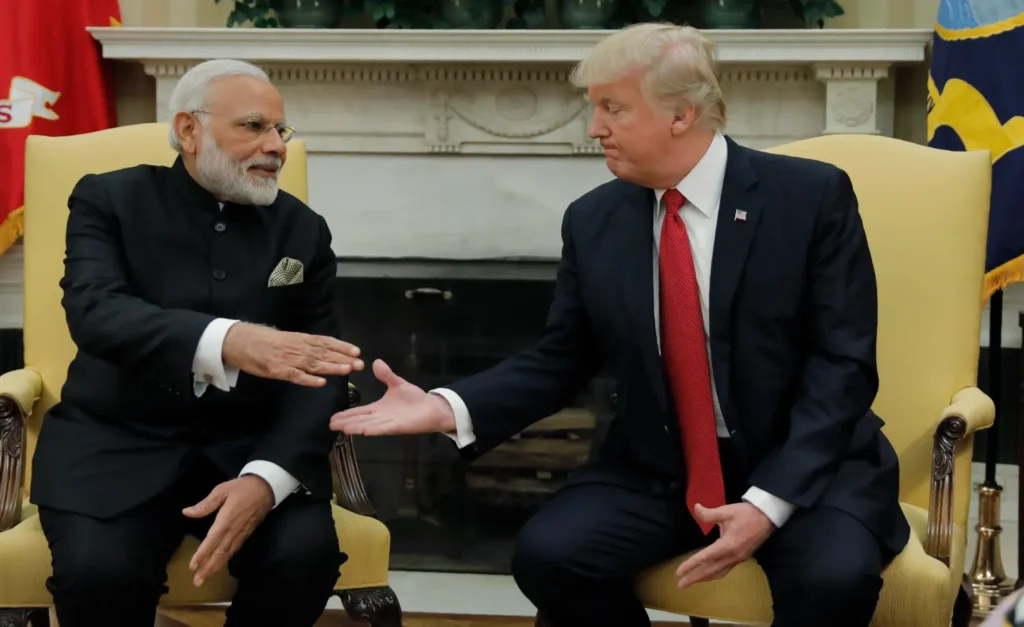
Several reasons explain why Trump warns India became the headline from the White House interaction:
1. India’s strong presence in the US rice retail market
Indian companies own two of the largest rice brands in the US supermarket sector.
2. Large volumes of rice imports
The US imports over 1 million tonnes of rice annually, with India being a major contributor.
3. Competitive prices
Indian rice varieties often enter the market at lower price points.
4. Election-period rhetoric
Trade issues often become sharper during election seasons.
5. India’s symbolic relevance
As one of the world’s largest agricultural economies, India’s example resonates globally.
Breakdown of India-US Agricultural Trade
India-US agricultural trade has expanded substantially over the past decade.
India’s major exports to the US include:
- Basmati rice
- Non-basmati rice
- Spices (turmeric, chilli, cardamom, pepper)
- Marine products
- Ready-to-eat foods
- Tea and coffee
- Processed fruits
- Organic products
US exports to India include:
- Almonds
- Walnuts
- Cotton
- Pulses
- Soya products
- Fresh fruits
- Distillers dried grains
- Agricultural machinery
Any potential tariff escalation could affect this entire ecosystem.
Past Trade Disputes Between India and the US
The two countries have clashed over several agricultural issues, including:
• Subsidies on rice and sugar (WTO complaints)
The US has previously raised concerns about Indian subsidies.
• Market access restrictions
India has imposed restrictions on items such as apples and pork.
• Retaliatory tariffs
India imposed tariffs on American almonds and other goods after US steel tariffs.
• Sanitary and phytosanitary barriers
Food safety standards often cause disputes.
While none of these disputes permanently damaged relations, they highlight the sensitive nature of agricultural trade. This historical backdrop adds weight to the statement Trump warns India in the current context.
Could New Tariffs Affect US Consumers?
If the United States imposes tariffs on Indian rice:
Consumers may face higher retail prices
Imported varieties could become costlier due to tariff duties.
Retailers may reduce imports
Supermarkets may shift to alternative suppliers or domestic options.
South Asian communities in the US may be impacted
Basmati rice is a staple in Indian, Pakistani, Bangladeshi, Nepali, and Middle-Eastern cuisines.
Restaurants may adjust menu prices
Food service establishments may experience increased operational costs.
These effects could make tariffs politically sensitive within the United States.
Global Rice Market Implications
India is the world’s largest rice exporter, accounting for over 40% of global trade in some years. Any restrictions imposed by a major consumer market such as the US could influence:
- International rice prices
- Export flows to Europe and the Middle East
- Competitor countries like Thailand and Vietnam
- Freight and insurance markets
- Commodity trading forecasts
Analysts say that if tariff threats materialise, India may redistribute exports to regions where basmati and specialty rice demand is growing.
Political Context Behind “Trump Warns India” Statement
The United States is currently navigating:
- Inflation concerns
- Agricultural sector instability
- Supply chain disruptions
- Rising import dependencies
- Global geopolitical recalibrations
In this environment, leaders often highlight foreign competition during discussions about domestic economic challenges. Trump’s remarks also reflect longstanding debates about:
- The role of subsidies
- Fair market pricing
- National self-sufficiency
- Voter expectations in farming states
Because agricultural states hold political significance, trade rhetoric frequently intensifies during economic downturns.
Indian Experts Call for Diplomatic Dialogue
Indian trade experts recommend that any concerns raised by the US should be handled through structured dialogue. They propose:
1. Government-to-government negotiations
Clarifying pricing, subsidies, and market behaviour.
2. Industry consultations
Engaging rice exporters and farmer associations.
3. Strengthening compliance
Ensuring all shipments meet international quality and price transparency standards.
4. Preparing for alternative markets
Diversifying export destinations in case tariffs reduce US demand.
They emphasise that India and the US share a strong strategic partnership beyond trade, making open communication essential.
Economists Weigh In on Tariff Threats
Economists say that tariff announcements often serve as bargaining tools rather than final decisions. Tariffs may or may not materialise, depending on:
- Bilateral negotiations
- Domestic industry lobbying
- Election cycles
- Investor reaction
- Global supply chain conditions
However, the phrase Trump warns India signals that agricultural trade could face new uncertainty depending on how future discussions unfold.
Potential Scenarios if Tariffs Are Imposed
Scenario 1: Moderate Tariffs (5–10%)
- Slight increase in retail prices
- Limited impact on trade volumes
- Higher profits for domestic growers
Scenario 2: High Tariffs (15–25%)
- Sharp drop in Indian rice imports
- Increase in local production incentives
- Shift in consumer preferences
Scenario 3: Targeted Tariffs on Specific Rice Types
- Basmati rice may face higher duties
- Non-basmati rice may escape penalties
- Retailers may diversify sourcing
Scenario 4: No Tariffs, Only Negotiations
- Trade continues normally
- Both countries cooperate on market access issues
At this stage, it is too early to determine which scenario is most likely.
How US Retailers Are Viewing the “Trump Warns India” Remarks
Major rice brands owned by Indian firms have strong distribution networks across:
- Walmart
- Costco
- Amazon
- Kroger
- Target
- Asian supermarkets
- Restaurant supply chains
Retailers say tariffs could:
- Affect supply planning
- Require renegotiation of contracts
- Alter profit margins
- Increase shelf prices
However, they also say consumer demand for basmati rice is strong and unlikely to decline significantly.
Broader Trade Discussions: Beyond Rice
The United States and India are negotiating several issues, including:
- Digital trade
- Intellectual property
- Agricultural standards
- Market access for dairy products
- Tariff reductions on industrial goods
- E-commerce regulations
- Pharmaceutical trade
India is one of the fastest-growing markets globally, making stable trade relations important for both nations.
Could the US File a WTO Case Against India?
If the United States believes India is subsidising rice in ways that distort global markets, it could file a World Trade Organization complaint.
However:
- WTO processes are slow
- Cases take years to complete
- Outcomes are not guaranteed
- Retaliation may occur
Therefore, unilateral tariffs are often viewed as a faster alternative.
US Farmers’ Long-Term Expectations
Farmers want:
- Higher domestic production incentives
- Stronger import safeguards
- Investment in storage, irrigation, and technology
- Stable commodity prices
- Long-term export opportunities
Trump’s remarks indicated that his administration sees tariffs as an essential policy instrument to support these goals.
India-US Relations Remain Strong Despite Trade Tensions
Despite periodic disputes, India and the US maintain close ties in:
- Defence cooperation
- Space and technology
- Counterterrorism
- Renewable energy
- Indo-Pacific security
- Education and research collaborations
Both countries have repeatedly resolved trade disagreements through dialogue.
Why the Statement “Trump Warns India” Matters
The phrase has become significant because:
- It signals a possible shift in US trade policy.
- It directly targets a major Indian export sector.
- It could influence global rice markets.
- It affects millions of farmers in both countries.
- It may shape the tone of upcoming trade negotiations.
The statement is therefore more than a political remark—it is a signal that trade discussions are entering a more intense phase.
Conclusion: What Comes Next After Trump warns India
The situation remains fluid. Trump’s warning to India about rice exports reflects growing concerns within the US agricultural community about market competition. While tariffs remain a possibility, they are not guaranteed. Both India and the United States recognise the importance of maintaining stable, mutually beneficial trade relations.
In the coming months, diplomatic discussions, market analyses, domestic pressures, and agricultural sector demands will shape the outcome. Whether or not tariffs are implemented, the statement Trump warns India underscores the evolving nature of international trade and the importance of continuous engagement between major economic partners.
For now, exporters, farmers, policymakers, and consumers in both nations will closely monitor developments, hoping for clarity and stability in an increasingly unpredictable global trade environment.
