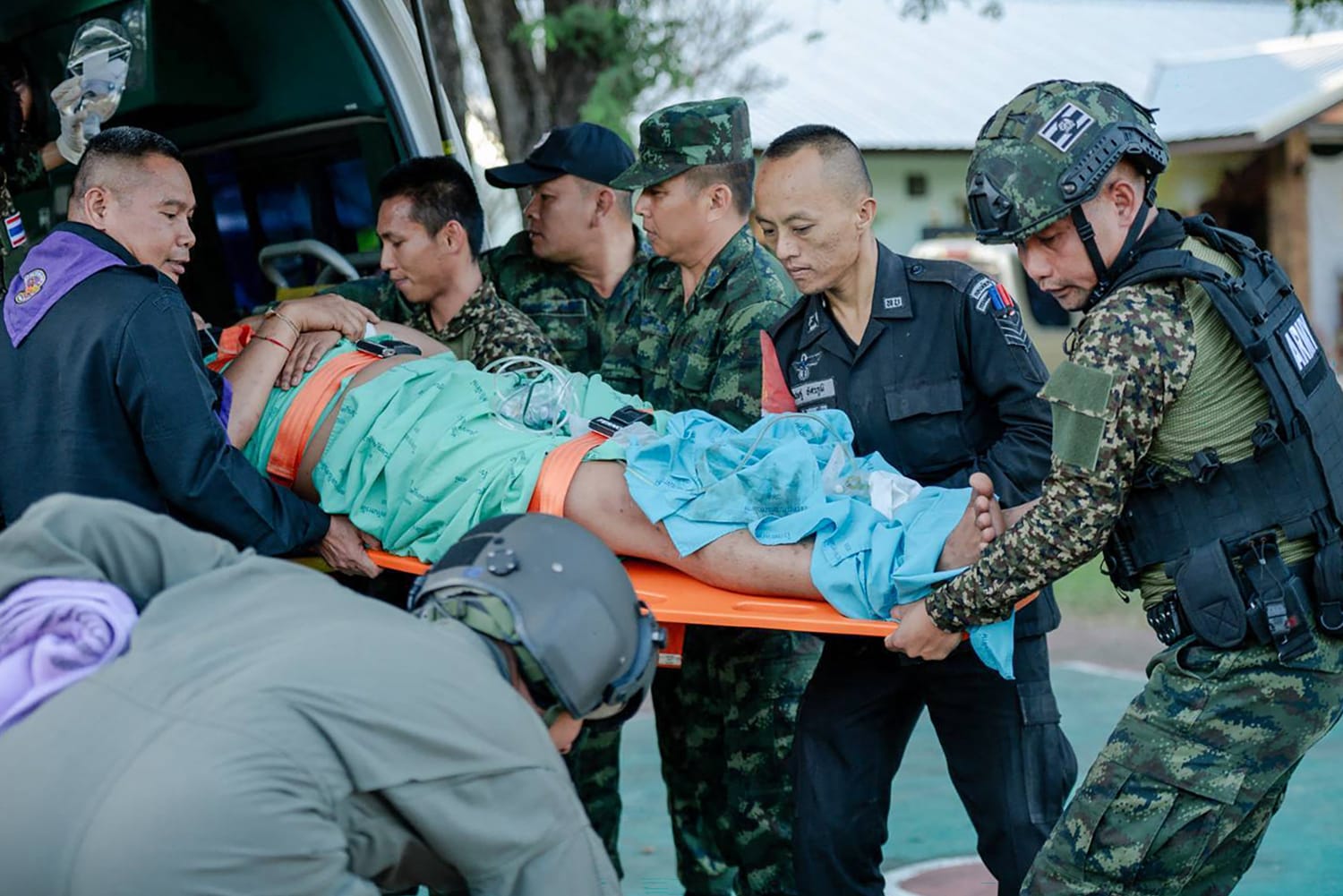
Thailand Cambodia clashes: Tensions along the long-contested Thailand–Cambodia frontier escalated sharply after Thailand launched a series of air raids on Monday in response to deadly border clashes. The renewed hostility ended months of fragile calm and triggered fresh displacement of thousands of civilians on both sides. As both governments traded blame, concerns grew across Southeast Asia about the risk of the conflict widening.
The escalating violence marks one of the most serious flare-ups in recent years, reviving memories of previous confrontations that caused heavy casualties and mass evacuations.
Thailand Cambodia Clashes Begin After Soldier’s Death
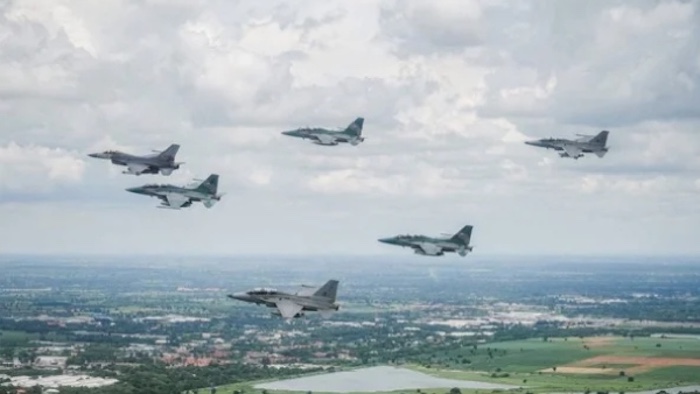
The latest round of violence erupted early Monday when Thailand’s military deployed aircraft along the border in Ubon Ratchathani province. According to Thai officials, the operation was carried out to “suppress Cambodian attacks” after one Thai soldier was killed during morning exchanges of fire.
Major-General Winthai Suvaree confirmed that at least eight people were wounded in addition to the soldier’s death. The Thai military stated that Cambodian troops had fired “small arms and curved weapons” starting at approximately 5:05am local time.
Thai authorities said they were officially informed of the soldier’s death around 7am, prompting immediate defensive countermeasures—including the air raids that intensified the tensions.
Cambodia Rejects Thai Claims in Ongoing Thailand Cambodia Clashes
Cambodia quickly disputed Thailand’s account, accusing the Thai military of initiating the confrontation. The Cambodian military released a statement on Facebook asserting that Thai forces opened fire at around 5am, months after what it described as repeated provocations.
Cambodia insisted its troops did not retaliate, even as the Thai operations escalated. Cambodian Information Minister Neth Pheaktra later confirmed to AFP that four Cambodian civilians were killed during the Thai air raids. Several casualties were reported in Oddar Meanchey and Preah Vihear provinces, where villagers lived close to the contested border.
At least ten Cambodian civilians were wounded, according to local authorities, further increasing the humanitarian toll.
Earlier Skirmishes Triggered Renewed
Monday’s fighting was preceded by a brief exchange of fire on Sunday in the Phu Pha Lek–Phlan Hin Paet Kon area of Thailand’s Sisaket province. Both nations blamed each other for that confrontation as well.
The Thai army said Cambodian fire injured two Thai soldiers, leading Thai forces to retaliate. A 20-minute firefight followed, underscoring how unstable the situation had become even before the airstrikes.
These back-to-back encounters shattered any lingering confidence in the truce that had been holding for several months.
Fragile Truce Collapses as Thailand Cambodia Clashes Intensify
A ceasefire agreement had ended five days of deadly conflict in July, during which at least 48 people were killed and nearly 300,000 were displaced. That ceasefire was brokered by Malaysian Prime Minister Anwar Ibrahim and U.S. President Donald Trump.
In October, both Thailand and Cambodia signed an expanded peace agreement in Kuala Lumpur aimed at preventing further clashes.
However, the truce began to unravel last month when a Thai soldier was severely injured in a landmine explosion. Thailand accused Cambodian forces of planting new devices, an allegation Cambodia denied. According to the Cambodian government, the landmine was a remnant of previous wars in the region.
The deterioration of trust created fertile ground for renewed violence.
Thai Leadership Responds to Rising
Thai Prime Minister Anutin Charnvirakul addressed the nation on Monday following the air raids. He emphasized that Thailand did not seek war but would act decisively to protect its sovereignty.
“Thailand has never wished for violence,” he said. “We have never initiated a fight or an invasion, but we will never tolerate a violation of our sovereignty.”
His remarks echoed the country’s long-standing stance of defense-only engagement while signaling that further military action remained possible if border incursions continued.
Cambodia Calls for Restraint Amid Ongoing Thailand Cambodia Clashes
The Cambodian military maintained that its troops had refrained from retaliating during the Monday assaults. It stated that Cambodia remained committed to peaceful conflict resolution under international law and previous bilateral agreements.
Cambodia’s former Prime Minister Hun Sen, father of current premier Hun Manet, also urged restraint. He accused Thai forces of attempting to provoke Cambodia into breaching the ceasefire agreements.
Hun Sen called on Cambodian athletes preparing for the Southeast Asia Games in Thailand to proceed with their schedules “as normal,” underscoring Cambodia’s desire to avoid broader escalation.
Thousands Evacuate Border Areas as Thailand Cambodia Clashes Spread
The violence forced mass displacement on both sides of the border.
Thailand’s Second Army Region announced that around 35,000 Thai residents were evacuated from vulnerable border villages. Military authorities placed several districts under temporary security restrictions.
In Cambodia, local administrators in Oddar Meanchey confirmed that villagers fled in large numbers after hearing explosions and artillery fire. Schools across the province were closed for safety reasons.
The humanitarian impact is expected to rise if fighting continues.
Regional Leaders Express Concern Over
Malaysian Prime Minister Anwar Ibrahim—who had helped broker the previous ceasefire—expressed deep concern about the renewed fighting. In a post on X, he urged both sides to exercise restraint and maintain communication channels.
“Our region cannot afford to see longstanding disputes slip into cycles of confrontation,” he warned, emphasizing Malaysia’s readiness to help restore calm.
Other ASEAN member states have also been monitoring developments closely, given the potential impact on regional stability and cross-border movement.
Historical Roots Behind Thailand Cambodia Clashes
The Thailand–Cambodia border dispute dates back more than a century. The 817-kilometer land boundary was originally mapped in 1907 by French colonial authorities when Cambodia was under French rule.
Several segments of the border remain undemarcated, leading to periodic disagreements over sovereignty. Tensions have flared repeatedly, especially near key areas such as the Preah Vihear Temple region.
In 2011, a weeklong artillery exchange between the two nations resulted in multiple deaths and damaged cultural heritage sites.
Despite numerous diplomatic efforts, a permanent resolution remains elusive.
Impact of Thailand Cambodia Clashes on Border Communities
Communities along the Thailand–Cambodia border rely heavily on agriculture, cross-border trade, and seasonal labor. Recurring clashes disrupt livelihoods, halt market activity, and force families into emergency shelters.
Local reports from Cambodian border districts indicated that some villagers abandoned livestock and crops. In Thailand, emergency responders established temporary shelters, while police and volunteers helped relocate elderly citizens.
Long-term economic disruptions are expected if the conflict persists.
Recommended Stories
Floating Markets in Thailand – A Feast for the Senses
Phi Phi Islands – Thailand’s Island Paradise
ASEAN and International Responses
ASEAN traditionally avoids direct intervention in member-state conflicts, but escalating violence may pressure the regional bloc to take a more active diplomatic role.
International analysts note that the involvement of major powers—such as the United States in brokering previous agreements—adds geopolitical complexity.
Human rights groups have also urged both governments to prioritize civilian safety and open humanitarian corridors for displaced families.
Possibility of Further Escalation
Military analysts say the risk of escalation remains high. Any misunderstanding, troop movement, or misfired artillery round could trigger larger confrontations.
Both nations have mobilized additional troops along key points, although neither has formally announced large-scale operations.
Observers warn that without immediate diplomatic engagement, border skirmishes could evolve into prolonged armed conflict.
Ceasefire Prospects and Diplomatic Outlook
Restarting talks under ASEAN frameworks appears to be the most likely diplomatic path. Malaysia, which successfully mediated the July ceasefire, has indicated willingness to assist again.
However, mutual distrust remains one of the biggest obstacles.
A sustainable peace agreement will require clearer border demarcation, joint patrol mechanisms, and mutual verification systems to prevent future clashes.
Until then, the region remains on edge.
Conclusion: Thailand Cambodia Clashes Highlight Need for Lasting Resolution
The recent Thailand Cambodia clashes underscore how unresolved historical disputes can rapidly destabilize border regions. While both nations blame each other for initiating the latest violence, the loss of life, civilian displacement, and humanitarian impact point to the urgent need for renewed dialogue.
As regional leaders call for restraint, the hope is that both governments will prioritize de-escalation and commit to a long-term peace framework. For now, communities along the border remain caught in the crossfire of a conflict that has simmered for more than a century.
