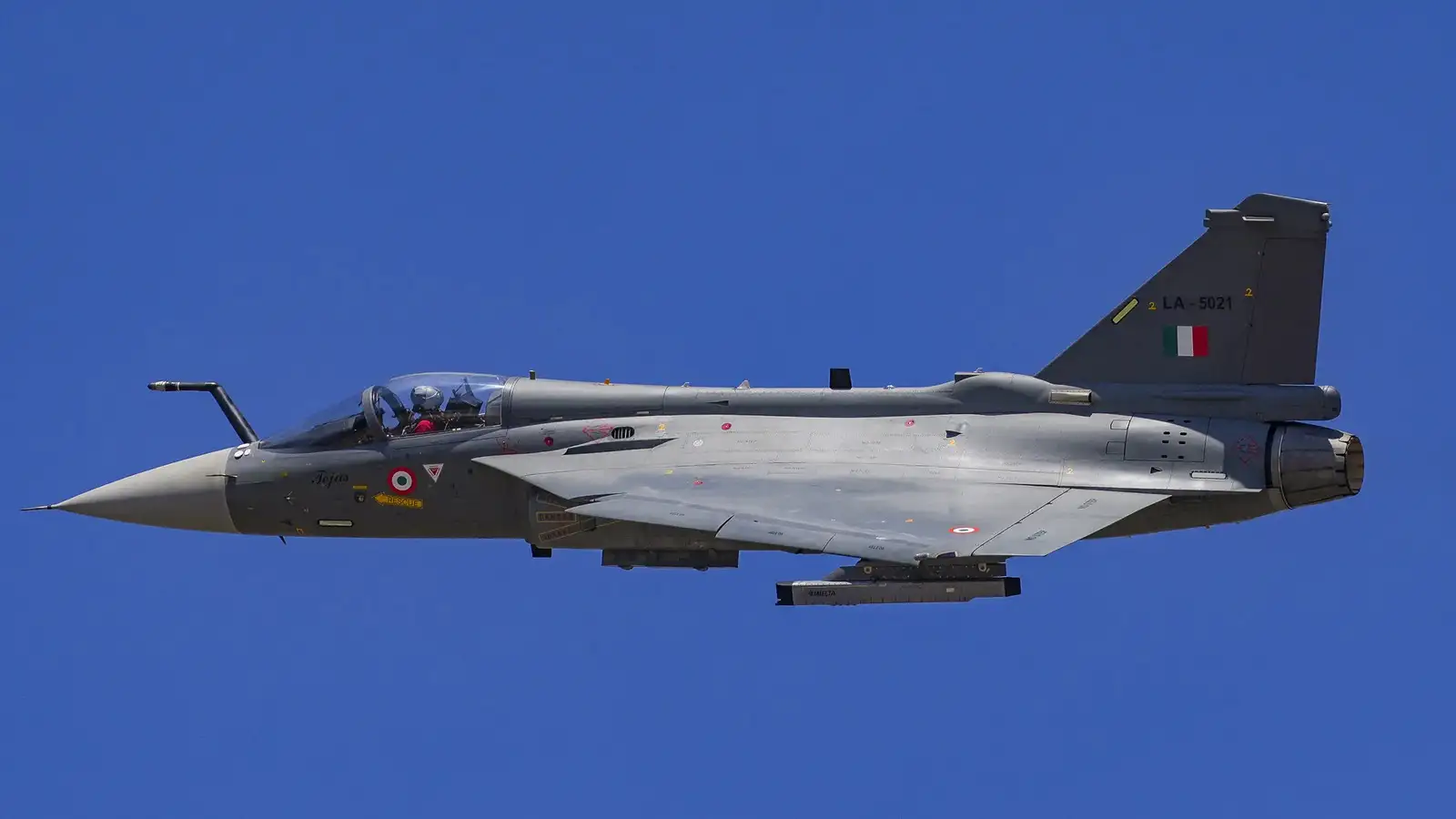
Tejas aircraft accident: India witnessed another Tejas aircraft accident after a Light Combat Aircraft (LCA) went down during an operational sortie. Fortunately, the pilot ejected safely, preventing what could have turned into a tragic loss. While the aircraft suffered damage, the safe rescue of the pilot has brought some relief.
The incident has once again put the spotlight on the Tejas program, India’s indigenous fighter jet project. Questions are being asked, but so are reassurances. What exactly happened? How serious is this for the Indian Air Force (IAF)? And what does it mean for the future of the program?
Let’s break it down in simple terms.
Tejas Aircraft Accident: What Happened During the Flight?
The latest Tejas aircraft accident occurred during a routine mission. According to preliminary information, the aircraft experienced a technical issue shortly after takeoff. The pilot followed emergency procedures before ejecting safely.
Eyewitnesses reported seeing the jet lose altitude rapidly before smoke was noticed in the sky. Within seconds, the pilot made the critical decision to eject. Emergency teams quickly reached the crash site and secured the area.
Importantly, no civilian casualties were reported. The aircraft crashed in a relatively isolated location, minimizing damage on the ground.
While initial reports suggest a mechanical fault, a detailed investigation is now underway. As per standard protocol, the Indian Air Force has constituted a Court of Inquiry to determine the exact cause of the Tejas aircraft accident.
Pilot Safe After Tejas Aircraft Accident
One of the most reassuring aspects of this Tejas aircraft accident is that the pilot is safe. The ejection system functioned as designed, proving once again why such safety mechanisms are critical in modern fighter jets.
Military officials confirmed that the pilot sustained minor injuries but is stable. Medical teams responded quickly, and the pilot is currently under observation.
Ejection from a fighter jet is not a simple process. It happens in seconds, under immense pressure, and often at high speeds. That the system worked flawlessly speaks volumes about the aircraft’s safety protocols.
Incidents like this remind us of the risks fighter pilots face daily. Their training, quick thinking, and composure make all the difference in emergencies.
Impact of the Tejas Aircraft Accident on the IAF Fleet
Whenever a Tejas aircraft accident occurs, it naturally raises concerns about fleet safety. However, experts caution against jumping to conclusions.
The Tejas is a relatively young aircraft in operational terms. As with any advanced fighter jet, periodic technical challenges are expected during its service life. Globally, even the most advanced aircraft programs have faced accidents in their early years.
The Indian Air Force may temporarily ground a section of the fleet for safety checks. This is standard procedure and ensures no systemic issue goes unnoticed.
At present, there is no indication that the entire fleet will be suspended for an extended period. Instead, inspections and technical reviews will guide the next steps.
Tejas Aircraft Accident and the Indigenous Defense Program
The Tejas aircraft accident also sparks debate about India’s indigenous defense manufacturing push. The Tejas project represents years of research, investment, and national pride.
Critics often highlight accidents as signs of weakness. However, aviation experts emphasize that accidents are not uncommon in developing aerospace ecosystems. What truly matters is how quickly issues are identified and corrected.
The Tejas has already proven its operational capability in multiple exercises. It has also attracted interest from international buyers.
In fact, each incident provides engineers with valuable data. Improvements made after such events often strengthen the program in the long run.
Safety Record of Tejas So Far
Compared to older fighter aircraft, the Tejas has maintained a relatively controlled safety record. Still, every Tejas aircraft accident draws significant attention due to the aircraft’s strategic importance.
India has operated fighter jets for decades, and accidents are unfortunately part of military aviation worldwide. The key metric is accident rate per flight hours, not isolated events.
So far, officials maintain that the Tejas remains within acceptable global safety standards. Investigations from previous incidents have led to upgrades in software, components, and maintenance procedures.
In other words, lessons are learned, and systems evolve.
Investigation Underway After Tejas Aircraft Accident
A high-level inquiry has already been launched into the recent Tejas aircraft accident. Investigators will examine:
- Flight data recorder information
- Engine performance logs
- Weather conditions
- Maintenance history
- Pilot inputs
The goal is simple: determine the root cause. Transparency is essential, especially when public confidence is involved.
The Indian Air Force is expected to release preliminary findings once the technical assessment is complete.
Public Reaction and Strategic Concerns
Public reaction to the Tejas aircraft accident has been mixed. Some express concern about safety, while others defend the indigenous fighter program.
In today’s digital age, news spreads instantly. Social media discussions often amplify fears before official details are released. However, defense analysts advise waiting for verified information.
Strategically, India continues to modernize its air force. The Tejas plays a vital role in reducing dependence on foreign suppliers. Therefore, maintaining confidence in the aircraft remains important.
News: NYC NJ Blizzard Warning: 12+ Inches Snow Forecast
Conclusion: A Setback, But Not a Crisis
The recent Tejas aircraft accident is undoubtedly a setback. However, with the pilot safe and investigations underway, it does not signal a crisis.
Modern military aviation is complex. Technical challenges can arise, even in advanced systems. What defines a strong defense program is resilience, accountability, and improvement.
The Tejas remains a cornerstone of India’s air defense strategy. While the accident is serious, the safe ejection of the pilot highlights the effectiveness of safety systems.
Now, all eyes are on the investigation. Answers will come. Adjustments will follow. And the program will move forward.
FAQs
- What caused the latest Tejas aircraft accident?
The exact cause is under investigation. Preliminary reports suggest a possible technical issue. - Is the pilot safe after the crash?
Yes, the pilot ejected safely and is reported to be stable. - Will the Tejas fleet be grounded?
Temporary safety inspections may occur, but no full fleet grounding has been confirmed. - Has Tejas faced accidents before?
There have been a few incidents, but the aircraft maintains a monitored safety record. - Does this accident affect India’s defense plans?
At present, the program continues. Investigations will determine any required changes.
