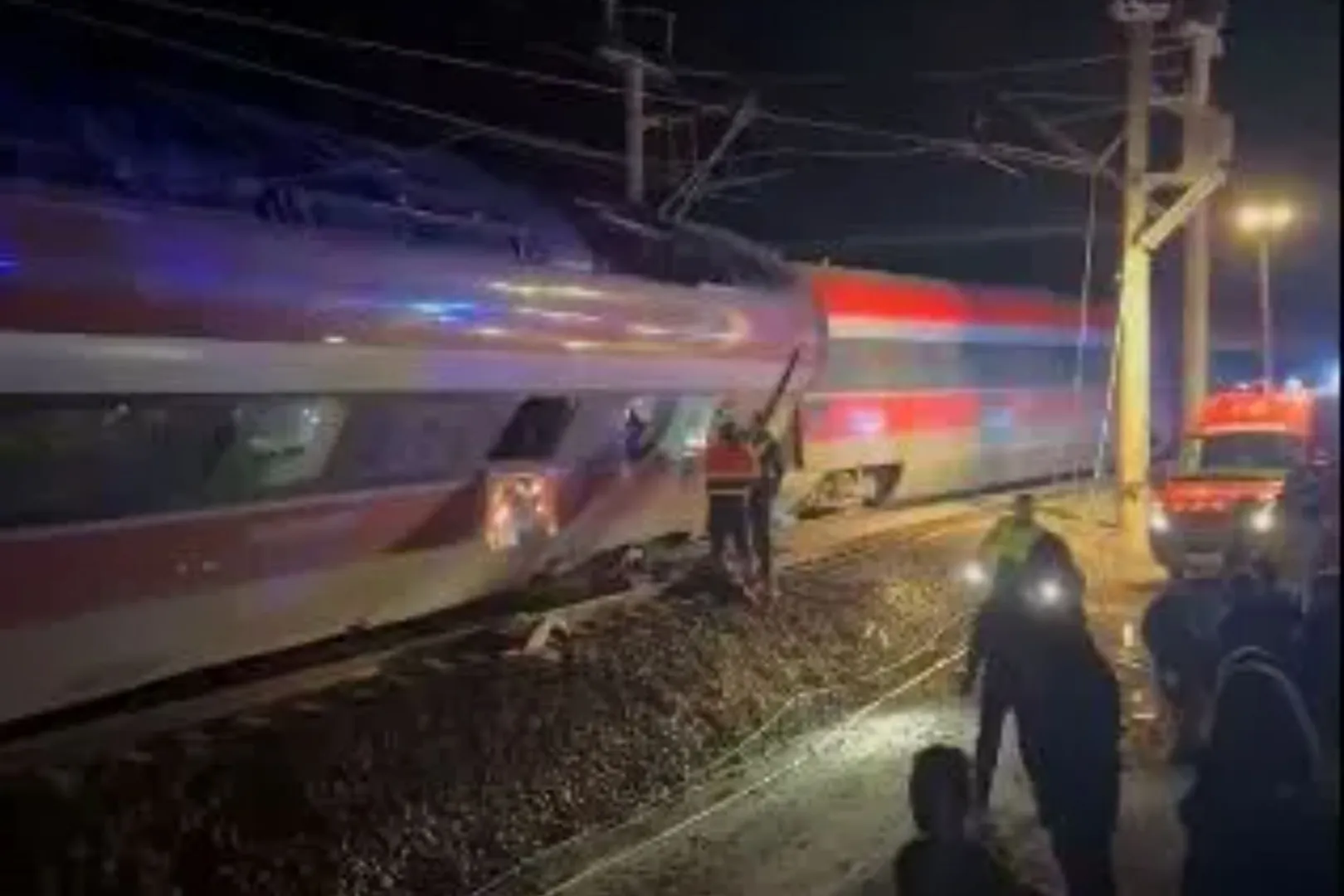
High-Speed Disaster in Spain: At Least 21 Dead in Major Train Crash
The Spain train crash in the southern region of Andalusia has become one of the country’s most devastating rail disasters in recent years. At least 21 people lost their lives, and dozens more suffered serious injuries after two high-speed trains collided near the town of Adamuz, close to Córdoba. Although emergency crews worked through the cold night to rescue survivors, authorities warned that the death toll could rise as the situation develops.
What makes this tragedy even more shocking is that the derailment happened on a straight section of track, an area previously refurbished in 2024. While investigators have opened a formal inquiry, officials confirmed that determining the exact cause may take weeks or even months.
This detailed report explores everything known so far: how the crash happened, what rescue teams faced, statements from officials, updates from survivors, and how Spain is responding to this national tragedy.
How the Spain Train Crash Happened: What Authorities Know So Far
The Spain train crash occurred shortly after 18:40 local time when a high-speed train traveling from Málaga to Madrid derailed on a straight section of the route. The derailment caused the train to slide onto another track, directly into the path of an oncoming train headed from Madrid to Huelva.
Officials from Adif, the Spanish rail network operator, explained that the first train — carrying about 300 passengers — left Málaga only ten minutes before the accident. The second train, operated by Renfe, was carrying nearly 100 passengers.
The first train, operated by Iryo, derailed with significant force, and its momentum pushed parts of the train into the opposite track. Moments later, the second train struck the derailed coaches. The result was a massive impact that left carriages twisted and crushed, making rescue operations extremely difficult.
Transport Minister Óscar Puente described the incident as “extremely strange,” noting that derailments on refurbished, straight tracks are rare. Investigators are now examining:
-
Possible mechanical failures
-
Track infrastructure issues
-
High-speed operational factors
-
Signaling system performance
-
External obstructions or unexpected conditions
Although several theories are under consideration, authorities emphasized that no official cause has been identified.
A Night of Difficult Rescue Operations and Rising Casualties
The aftermath of the Spain train crash placed enormous pressure on rescue teams. Andalusian emergency services reported that over 73 people sustained injuries, with more than 30 considered serious. Fire crews, medics, police units, and Red Cross volunteers were deployed immediately.
One of the most heartbreaking challenges was reaching victims inside the tangled steel. Córdoba fire chief Francisco Carmona explained to RTVE that crews sometimes had to remove the deceased to reach survivors trapped beneath them. He described the task as “hard and agonizing,” requiring careful coordination to avoid further injury.
The twisted state of the wreckage forced rescue teams to use:
-
Heavy cutting equipment
-
Thermal imaging cameras
-
Drones with night-vision capability
-
Hydraulic tools to separate crushed metal
Because the crash happened after sunset, the freezing temperatures made conditions more difficult — not only for rescuers but also for survivors waiting to be pulled out.
Emergency shelters were set up, and additional medical teams were stationed at hospitals across Córdoba and Málaga to treat incoming patients.
Survivor Accounts: Stories From Inside the Spain Train Crash
Survivors of the Spain train crash described an experience that felt sudden, violent, and confusing. Journalist Salvador Jiménez, who was onboard one of the trains, shared his firsthand experience with RTVE. He said the initial jolt felt like an earthquake, followed by violent shaking as the train derailed.
Passengers were thrown from their seats, and several windows shattered. Jiménez noted that many people panicked because the train plunged into darkness before emergency lights activated.
Passengers reported:
-
Loud tearing sounds as metal scraped against the tracks
-
Overhead bags falling and hitting people
-
Difficulty moving due to twisted seats and broken panels
-
A strong smell of smoke and dust
Many survivors later stood in the cold for hours while waiting for buses to transport them to safety.
The Emergency Agency of Andalucía urged survivors to post online confirming they were alive, as thousands of families struggled to get updates.
Voices From Leadership: Spain Reacts to a National Tragedy
Spain’s Prime Minister Pedro Sánchez expressed condolences and pledged full support for affected families. He described the night as one filled with “deep pain” and asked the nation to stand united in grief.
King Felipe VI and Queen Letizia also released a statement expressing their “heartfelt condolences” to victims’ families and offering prayers for the injured.
International leaders responded as well:
-
French President Emmanuel Macron conveyed sympathy, stating that France stood with Spain.
-
EU Commission President Ursula von der Leyen offered support from the European Union.
Across Spain, citizens gathered online and in public spaces to honor the victims, many recalling Spain’s tragic 2013 train derailment in Galicia, which killed 80 people. While that crash involved different circumstances, both events have rekindled discussions about high-speed rail safety.
What We Know About the Trains Involved in the Spain Train Crash
The high-speed train that derailed first was a Freccia 1000 model, a modern train capable of reaching 400 km/h (250 mph). This type of train is widely used in European high-speed networks and is known for advanced technology, including:
-
Active safety systems
-
Electronic braking controls
-
Tilt mechanisms for maintaining speed on curves
The second train involved was operated by Renfe, Spain’s national rail company, which has a strong safety record. Both trains had undergone routine inspections, according to early reports.
As investigators begin reviewing:
-
Black box data
-
Onboard computer logs
-
Signaling information
-
Track maintenance records
-
Engineer communication transcripts
they aim to determine whether human error, mechanical failure, or infrastructure problems contributed to the disaster.
Rail Services Suspended Across Madrid–Andalusia Corridor
Following the Spain train crash, all services between Madrid and Andalusia were suspended. Adif announced that lines would remain closed as crews clear the tracks and assess structural integrity.
Train stations in:
-
Atocha
-
Córdoba
-
Seville
-
Málaga
-
Huelva
established dedicated support centers for families seeking updates about missing or injured relatives.
Throughout the night, terminals remained open, offering blankets, food, and medical assistance. Many stranded passengers expressed gratitude for the support but also frustration due to limited information.
Red Cross Support for Families After the Spain Train Crash

The Spanish Red Cross deployed psychological support units to assist relatives waiting for updates. Miguel Ángel Rodríguez, speaking to RNE radio, said the emotional strain was immense because many families had not yet received confirmation of their loved ones’ conditions.
Support teams provided:
-
Crisis counseling
-
Emergency shelter
-
Transportation assistance
-
Medical aid
-
Social support services
The Red Cross emphasized that the next 24 hours would be crucial as investigators continue identifying victims and survivors.
Investigation Timeline: What Happens Next After the Spain Train Crash?
Officials confirmed that the investigation into the Spain train crash would be extensive. Train accidents of this scale require detailed engineering analysis, and experts estimate that initial findings could take a month or more.
Key areas under examination include:
1. Track Infrastructure
-
Were there hidden defects?
-
Was the refurbishment completed correctly?
2. Speed and Signaling Data
-
Did the train exceed recommended limits?
-
Did signals function properly?
3. Mechanical Components
-
Condition of wheels, brakes, and suspension
4. Human Factors
-
Actions taken by the train engineers
-
Communication timing during the derailment
Authorities stressed the need for accuracy over speed. Early speculation is discouraged to avoid misinformation.
Spain Mourns as Rail Safety Questions Re-Emerges
The Spain train crash has renewed nationwide conversations about rail safety. Spain is known for having one of Europe’s most advanced high-speed networks. However, major disasters, though rare, leave lasting emotional scars.
Many Spaniards still remember the 2013 Galicia derailment, and the latest crash has prompted calls for continued investment in:
-
Track modernization
-
Real-time monitoring systems
-
Safety compliance audits
-
Emergency response planning
Government officials promised a full review once the immediate crisis passes.
A Nation in Shock After the Spain Train Crash
The Spain train crash near Adamuz has shaken the country and left families grieving, communities in mourning, and investigators searching for answers. With 21 confirmed dead, over 70 injured, and hundreds affected, the tragedy represents a painful moment for Spain’s transportation history.
As rescue efforts continue and investigations deepen, Spain — along with the international community — stands united in sorrow and support. More updates are expected as authorities release official findings.
