
PAN Aadhaar and Passport: Identity documents like PAN, Aadhaar, and Passport are essential for banking, taxation, travel, education, employment, and almost every government or private service in India. The Government of India has introduced several new rules, digital updates, security enhancements.
PAN Aadhaar and Passport These updates aim to improve national security, reduce identity fraud, simplify documentation, and make citizen services more digital and efficient.
This comprehensive guide explains: PAN Aadhaar and Passport
- All new rules for PAN, Aadhaar, and Passport
- Eligibility and compliance requirements
- Penalties for non-compliance
- Step-by-step update processes
- New digital systems introduced by the government
- How these rules affect taxpayers, students, travelers, NRIs, businesses, and job seekers
Let’s dive into the updated identity documentation landscape
Section 1: Why the Government Updated Rules: PAN Aadhaar and Passport
Before understanding the changes, it’s important to know why these updates were introduced. India is undergoing rapid digital transformation. To keep citizen records accurate and secure, the government must regularly upgrade verification systems.
Key reasons behind the updates:
1. Strengthening National Security
With rising cybercrime and identity fraud, stronger verification protocols were required. PAN–Aadhaar integration, biometric validation, and digital police verification help prevent misuse.
2. Reducing Document Fraud
Fake PAN cards, cloned Aadhaar cards, and forged passports have caused major financial frauds. Updated rules curb duplication and impersonation.
3. Promoting Digital Governance
Digital KYC, online documentation, and e-passport rollouts support India’s Digital India mission.
4. Increasing Financial Transparency
PAN–Aadhaar linking helps track high-value transactions, detect tax evasion, and improve compliance.
5. Faster Public Services
Digital police verification, Aadhaar auto-verification, and passport automation significantly reduce processing times.
Section 2: New PAN Card Rules
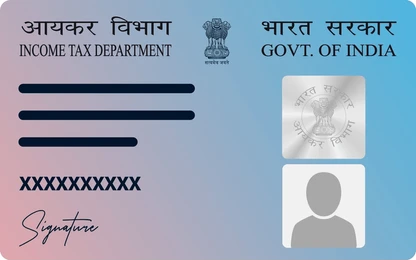
PAN remains India’s most important financial identity document. Any update impacts taxpayers, investors, businesses, and banking customers.
Below are the major PAN rule updates for
1. PAN–Aadhaar Linking Made Fully Mandatory
PAN Aadhaar and Passport Although the requirement existed earlier, the government strictly enforced the rule.
What happens if your PAN is not linked?
Your PAN becomes inoperative, meaning you cannot:
- File Income Tax Returns
- Open a new bank account
- Buy or sell property
- Make investments in mutual funds or stocks
- Deposit or withdraw ₹50,000+
- Apply for loans or credit cards
- Update KYC anywhere
Penalty
₹1,000 late linking fee applies.
Who Is Exempt?
- NRIs
- Foreign citizens with Indian investments
- Residents of Assam, Meghalaya, J&K (if Aadhaar unavailable)
- Super senior citizens (in specific cases)
2. PAN Must Be Updated With Mobile Number and Email
The Income Tax Department now requires citizens to maintain:
- Active mobile number (mandatory)
- Updated email ID
These are needed for:
- e-KYC
- OTP-based ITR verification
- Income Tax Portal login
- AIS/TIS access
- Refund status updates
If your phone/email is outdated, your return may remain unverified.
3. Strict KYC Norms for PAN-Based Transactions
Banks, NBFCs, stockbrokers, and mutual fund platforms must validate:
- PAN name and Aadhaar name match
- PAN is authentic and active
- PAN belongs to the person performing the transaction
High-value transactions require automatic PAN verification:
- Cash deposits above ₹2 lakh
- Property transactions
- Large fund transfers
- Gold and real estate investments
This helps prevent tax evasion and money laundering.
4. PAN as a Unified Business Identifier
Every business entity—company, LLP, partnership, MSME—must obtain a PAN at the time of registration.
PAN is now used for:
- GST operations
- Customs and Import–Export documentation
- EPFO and ESIC
- Digital Signature Certificates
- Startup recognition
- Business loan applications
This makes compliance uniform across departments.
5. Real-time PAN Verification System Upgraded
The Income Tax Department has introduced:
- Faster real-time API verification
- Better fraud detection
- Automatic risk alerts for suspicious PAN usage
- Error-proof linking with Aadhaar database
This improves transparency across financial platforms.
Section 3: New Aadhaar Card Rules
Aadhaar is the most widely used identity document in India, covering more than 1.25 billion citizens. UIDAI has introduced several important changes
1. Aadhaar Update Every 10 Years — Now Mandatory Soon
To ensure accurate identification, UIDAI recommends:
- Updating photo
- Updating address
- Updating biometrics (fingerprint + iris)
- Updating identity documents
Why it matters:
- Reduces authentication failures
- Avoids mismatch in bank and government records
- Helps during passport and visa applications
- Prevents fraudulent Aadhaar usage
Who must update soon?
- Students
- Working professionals
- Senior citizens
- Individuals relocating frequently
- Loan or credit card applicants
2. Free Aadhaar Update Window (Online Only)
UIDAI periodically offers citizens free update windows on the myAadhaar portal.
During this period, you can:
- Upload new address proof
- Correct name spelling
- Update DoB (within allowed rules)
- Change photo online (in some cases)
- Update mobile/email details
Offline updates continue to cost ₹50–₹100.
3. Aadhaar PVC Card Gains Popularity
UIDAI’s PVC Aadhaar card offers:
- QR code with secure digital signature
- Water-resistant material
- 10-year durability
- Portable smart-card size
- Anti-tampering features
It is optional but widely preferred.
4. New Biometric Privacy and Security Regulations
UIDAI now prohibits:
- Storage of biometric data by private companies
- Use of fingerprints for unauthorized authentication
- Reuse of stored biometric images
Penalty for misuse:
Up to ₹1 lakh + cancellation of license for service providers.
5. Aadhaar Authentication Required for High-Value Transactions
Banks may need Aadhaar authentication for:
- Opening new accounts
- Applying for large loans
- FD/RD investments
- High-value cash deposits
- Property registration
This ensures that the same Aadhaar is used across all financial documents.
6. Blue Aadhaar for Children — Updated Rules
Aadhaar for kids under 5 is called Blue Aadhaar.
New rules:
- Valid only until age 5
- Mandatory biometric update after age 5
- Another biometric update at age 15
- Parents must update school and scholarship records accordingly
Failure to update may cause issues in:
- School admissions
- Scholarship verification
- Passport issuance
- Government welfare benefits
7. Aadhaar Virtual ID (VID) Usage Expanded
Citizens can now share a temporary 16-digit Virtual ID instead of their Aadhaar number for privacy.
VID protects:
- Aadhaar number
- Biometric data
- Demographic details
Many banks and apps now accept VID for e-KYC
Section 4: New Passport Rules
The Passport Seva system and the Ministry of External Affairs (MEA) have introduced major updates to simplify issuance, reinforce security, and enhance digital processes.
1. Digital Police Verification Reduces Processing Time
Traditional verification took weeks; digital verification speeds up the process.
New system features:
- Police receive documents digitally
- Verification completed within 7–14 days
- No physical submission of documents in most cities
- Automated background checks
- SMS updates to applicants
The goal is to implement 100% paperless verification.
2. All Old Annexures Removed — Only One Self-Declaration Needed
Annexures A–L are no longer required.
Now, citizens only need a single self-declaration form, which simplifies:
- Name change
- Address change
- Minor passport
- Single-parent details
- Spouse name updates
- Lost/damaged passport replacement
No need for notarization or gazetted officer signatures.
3. Updated Passport Validity Rules

- Adults: 10 years validity
- Minors: 5 years or until age 18
New rule for minors above 15:
They can apply for a full 10-year passport by paying additional fees.
This benefits students applying for foreign admissions.
4. Passport Renewal Allowed Anytime After 3 Years
Citizens no longer need to wait until expiration.
Renewal allowed:
- Up to 1 year before expiry
- Up to 3 years after expiry
Early renewal is recommended for frequent flyers.
5. Faster Tatkal Passport With Stricter Verification
Tatkal passports are issued in 1–3 days, but with:
- Aadhaar-based identity authentication
- PAN verification
- Employer verification for applicants working in companies
- Digital police record checking
This reduces fraudulent passport applications.
6. Simplified Passport Rules for NRIs
NRIs often face documentation challenges. The new rules ease these problems.
Updated NRI passport rules:
- No need to submit Indian address proof
- Foreign address accepted as primary address
- Expired passports can be renewed
- Passport services available at all Indian missions globally
- Name change rules simplified
- Faster reissue for lost or stolen passports abroad
7. e-Passport (Digital Passport) Rollout Expanded
India is gradually introducing chip-enabled e-passports, which include:
- Biometric data
- Embedded secure chip
- Tamper-proof design
- Faster immigration scanning
- Better global acceptance
Over ₹400 crores has been allocated for full-scale implementation.
Section 5: Step-by-Step Guide to Update PAN, Aadhaar & Passport
Many citizens are confused about how and where to update documents. Below are simplified steps.
How to Update PAN
Step 1: Visit the Income Tax e-Filing Portal
Step 2: Link PAN with Aadhaar
- Go to Profile → Link Aadhaar
- Pay ₹1,000 if linking after deadline
Step 3: Update Mobile & Email
- Go to My Profile
- Add new mobile number
- Verify with OTP
Step 4: Update PAN Details (If Needed)
You can update:
- Name
- Father’s name
- Date of Birth
- Signature
- Photo
Use NSDL or UTIITSL portals.
How to Update Aadhaar

Step 1: Visit myAadhaar Portal
myaadhaar.uidai.gov.in
Step 2: Choose “Update Document”
- Upload new photo
- Update address
- Update identity proof
- Correct spelling errors
Step 3: For Biometric Update
Visit an Aadhaar Seva Kendra.
Step 4: Download Aadhaar PVC (Optional)
Cost: ₹50
Delivered by India Post.
How to Update Passport
Step 1: Register on Passport Seva Portal
Step 2: Fill out the renewal/reissue application
Step 3: Upload required documents
- Aadhaar
- PAN
- Address proof
- Self-declaration form
Step 4: Schedule appointment at PSK/POPSK
Step 5: Complete digital police verification
Step 6: Receive passport by post
PAN Aadhaar and Passport
Table 1: Summary of New PAN Rules
| Rule | What It Means | Who Must Comply |
|---|---|---|
| PAN–Aadhaar linking mandatory | PAN becomes inactive if not linked | All taxpayers |
| Mobile & email update | OTP verification required | PAN holders |
| Strict KYC | PAN must match Aadhaar & bank details | Bank users, investors |
| Business PAN mandatory | PAN required for all registrations | Companies, MSMEs |
| High-value PAN verification | Transactions above ₹2 lakh monitored | All citizens |
Table 2: Summary of New Aadhaar Rules
| Rule | Purpose | Notes |
|---|---|---|
| 10-year mandatory update | Better accuracy | Photo + biometrics |
| Free update window | Reduce costs | Online only |
| PVC card option | Durability | ₹50 |
| Biometric privacy rules | Prevent misuse | Penalties apply |
| Aadhaar for high-value transactions | Financial transparency | Bank KYC |
| Blue Aadhaar rules | Child identity verification | Updates at 5 & 15 years |
Table 3: Summary of New Passport Rules
| Rule | Meaning | Benefit |
|---|---|---|
| Digital police verification | Faster passport | 7–14 days |
| Removal of Annexures | Only one form | No notary |
| Validity rules | 10 years adults | Longer for students |
| Early renewal | Renew anytime | No delays |
| Tatkal stricter | Background checks | Prevent fraud |
| NRI simplified rules | Global access | Easy renewa |
Section 7: Combined Impact — How These Rules Affect Daily Life: PAN Aadhaar and Passport
The interconnected updates aim to streamline identity verification for every Indian citizen.
1. Faster Approvals in Banking and Finance
- Quick loan approvals
- Smooth KYC
- Faster investment onboarding
- Immediate tax filing authentication
2. Easier International Travel
- Faster passport issuance
- Easier visa applications
- Faster immigration through e-passports
3. Reduced Chances of Fraud
- No duplicate Aadhaar
- No fake PAN usage
- No forged passports
4. Better Government Service Delivery
- Subsidy benefits become error-free
- Address updates reflect across departments
- Police verification becomes smoother
Section 8: Frequently Asked Questions: PAN Aadhaar and Passport
1. Is PAN–Aadhaar linking compulsory for everyone?
Yes, except NRIs, foreign nationals, and specific state exemptions.
2. How often must Aadhaar be updated?
Once every 10 years (recommended and soon to be made mandatory).
3. Can I renew my passport before it expires?
Yes, anytime within 1 year before expiry and within 3 years after expiry.
4. Are e-passports available everywhere?
Currently limited but expanding across India.
5. Is Aadhaar needed for property transactions?
Yes, banks and registrars may require Aadhaar authentication.
6. What happens if PAN becomes inoperative?
You cannot file ITR, open accounts, invest, or perform high-value transactions.
Section 9: Compliance Checklist: PAN Aadhaar and Passport
PAN Checklist:
✔ PAN–Aadhaar linked
✔ Mobile & email updated
✔ Name spelling consistent everywhere
✔ PAN validated on e-filing portal
Aadhaar Checklist:
✔ Aadhaar updated in last 10 years
✔ Latest address added
✔ Biometric update done
✔ PVC Aadhaar ordered
Passport Checklist:
✔ Passport has 1-year validity remaining
✔ Address matches Aadhaar/PAN
✔ Police verification history clear
✔ Self-declaration form completed
Conclusion: PAN Aadhaar and Passport
PAN Aadhaar and Passport The identity ecosystem in India is evolving rapidly. The updated rules for PAN, Aadhaar, and Passport aim to make systems more secure, transparent, and digitally integrated. By following the new compliance requirements, citizens can avoid penalties, reduce document mismatches, and enjoy faster access to banking, travel, taxation, and digital services.
Keeping all three identity documents updated is essential in today’s digital-first world. With correct information, timely updates, and a proactive approach, every Indian can benefit from these improved systems.
