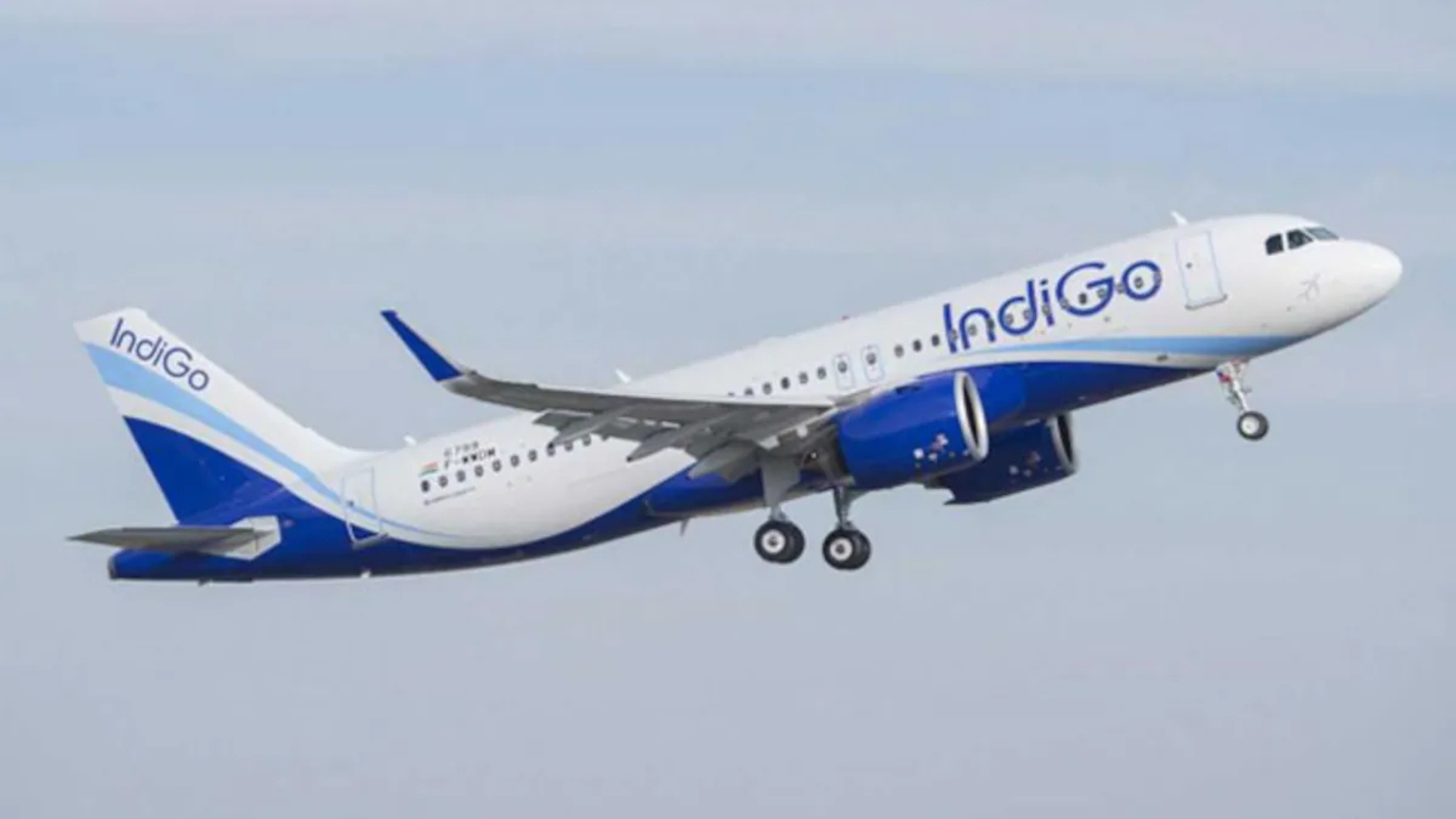
IndiGo flight cancellations: India’s largest airline by market share, continued to face unprecedented operational disruptions on Monday, with more than 450 flights cancelled across multiple airports. The crisis, triggered by an acute shortage of cockpit crew following the implementation of new Flight Duty Time Limitations (FDTL) norms, has now entered its fourth consecutive day, creating widespread delays, cancellations, and passenger distress nationwide.
IndiGo flight cancellations With operations still far from stabilizing, the situation has evolved into one of the most severe aviation disruptions India has ever witnessed. Refunds worth ₹610 crore have already been processed, reflecting the massive scale of impact felt by travellers across the country.
Massive IndiGo flight cancellations Continue Across India
As of 10:30 am on Monday, IndiGo flight cancellations reported significant cancellations at major airports, pushing the total number to 456 flights. These numbers underscore the magnitude of the crisis and the continuing struggle of the airline to bring operations back to a normal schedule.
A detailed airport-wise breakdown shows:
- Delhi Airport: 134 flights cancelled (75 departures, 59 arrivals)
- Bengaluru Airport: 127 cancellations
- Chennai Airport: 71 cancellations
- Hyderabad Airport: 77 cancellations
- Jammu Airport: 20 cancellations
- Ahmedabad Airport: 20 cancellations
- Vizag Airport: 7 cancellations
- Mumbai, Kolkata, Pune, Jaipur, and other metros also faced considerable disruptions
These cancellations have come on the heels of an already turbulent weekend, during which IndiGo flight cancellations over 650 flights on Sunday and more than 1,000 flights two days earlier. Each day witnessed thousands of passengers stranded, rebooking travel, or waiting for refunds, adding pressure on airport authorities, airline staff, and the aviation regulator.
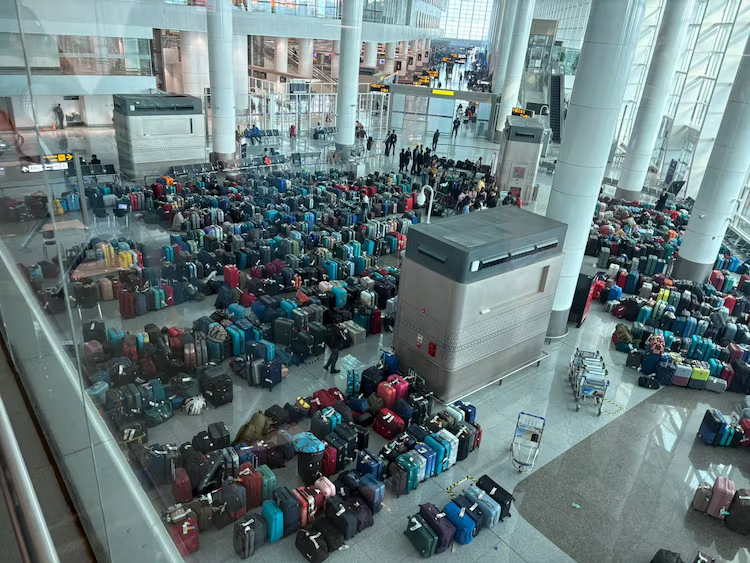
Why IndiGo flight cancellations IndiGo’s Operations Collapsed: The FDTL Factor
According to IndiGo flight cancellations IndiGo’s official statement, the primary trigger behind the mass cancellations was a sharp rise in pilot unavailability caused by the full implementation of FDTL (Flight Duty Time Limitations) norms.
FDTL rules — designed to improve pilot rest, reduce fatigue, and enhance flight safety — impose strict duty-hour limitations. Once enforced, airlines must adjust crew rosters, flight schedules, and duty rotations to comply with safety protocols.
However, IndiGo flight cancellations reportedly struggled to align its vast network with the updated requirements, resulting in large gaps in pilot deployment. This imbalance caused a chain reaction of:
- Last-minute crew shortages
- Network-wide operational delays
- Cancellation of entire flight rotations
- Inability to assign standby crew
- Massive strain on airport resources
The situation worsened as grounded aircraft and displaced crew disrupted subsequent connections, turning isolated problems into a full-blown nationwide breakdown.
Pilot Shortage or Planning Failure? Government Steps In
As frustrations mounted among passengers, the Union Civil Aviation Ministry intervened, questioning the airline’s preparedness and crisis management capabilities.
Civil Aviation Minister Ram Mohan Naidu stated that the responsibility for operational failure rested with IndiGo flight cancellations He emphasized that the direction regarding pilot duty rules was issued a year ago, allowing sufficient time for compliance.
This sparked debate within the aviation sector:
- Was IndiGo caught off guard?
- Did the airline fail to plan for the rostering changes?
- Is there an industry-wide shortage of trained cockpit crew?
DGCA (Director General of Civil Aviation) officials indicated that the airline was expected to anticipate crew shortages and adjust operations proactively. Instead, cancellations spiraled, impacting thousands of passengers daily.
In response, the government temporarily stayed the enforcement of the FDTL regulation, giving IndiGo flight cancellations breathing room to stabilize operations. However, aviation safety experts warn that suspending rest rules may only serve as a short-term fix.
Refunds Worth ₹610 Crore Processed
IndiGo flight cancellations confirmed that it has processed ₹610 crore in ticket refunds to affected passengers as of Saturday. This highlights the scale at which cancellations have occurred and the financial burden placed on the airline.
Refund statistics include:
- Full refunds for cancelled flights
- Compensation under passenger charter guidelines
- Reimbursement of baggage issues
- Vouchers and alternative travel options
In addition, the airline claims to have delivered 3,000+ pieces of delayed baggage to passengers across India, another fallout of the disrupted network.
Passenger complaints, however, continue to pour in across social platforms. Many allege long waiting times, delays in receiving refunds, and inadequate communication from the airline.
Chaos at Airports: What Travellers Experienced
Scenes at major Indian airports reflected the severity of the disruption:
1. Long queues at check-in counters
Passengers reported waiting for hours as ground staff struggled to manage sudden schedule changes.
2. Gate hold-ups and repeated delays
Many flights were marked delayed multiple times before eventually being cancelled.
3. Stranded travellers at night
With last-minute cancellations late in the evening, several passengers were unable to find alternative options.
4. Scarcity of customer support
Phone lines were jammed, and on-ground staff were overwhelmed, leading to communication gaps.
5. Baggage delays
Due to sudden ground stoppages, luggage often reached airports but not the passengers.
Airports like Delhi, Bengaluru, Hyderabad, and Chennai saw peak-level congestion similar to holiday travel seasons, except the crowds were filled with uncertainty rather than excitement.
DGCA Issues Notice to IndiGo Leadership
As part of the investigation, DGCA issued notices to:
- IndiGo CEO Pieter Elbers
- Accountable Manager Isidro Porqueras
Both executives were initially given until Sunday evening to submit detailed responses regarding the mass cancellations and contingency planning failures. On Sunday, the regulator granted them a 24-hour extension, requiring submissions by 6 pm on Monday.
DGCA’s inquiry will examine:
- Crew rostering strategy
- Compliance with FDTL norms
- Crisis mitigation planning
- Passenger compensation adherence
- Operational decision-making during disruptions
Depending on findings, penalties or operational directives could follow.
How IndiGo Plans to Recover Operations
IndiGo is examining the root causes and claims the crisis was triggered by a combination of:
- FDTL implementation challenges
- Network complexity
- Inadequate standby crew availability
- Staff fatigue
- High passenger traffic volume
- Operational bottlenecks at major hubs
To stabilize operations, IndiGo is focusing on:
1. Reworking pilot rosters
Additional crews are being assigned and fatigue management systems are being recalibrated.
2. Reducing flight load
Non-essential and low-demand routes may temporarily be scaled down.
3. Prioritizing metro-to-metro connectivity
This helps manage maximum passenger movement with minimal crew rotation issues.
4. Accelerating training pipelines
Additional first officers and captains are being inducted through fast-track programs.
5. Strengthening communication services
Customer support channels are being expanded to handle large call volumes.
6. Enhancing on-ground coordination
Airport handling teams are being reinforced with additional manpower.
IndiGo aims to return to near-normal operations within days, though experts believe full normalization may take longer due to the scale of disruptions.
Govt Caps Airfares to Prevent Surge Pricing
In the wake of widespread cancellations, airfare on many routes shot up sharply. To prevent airlines from exploiting high demand during the crisis, the ministry temporarily capped airfares, especially on high-traffic routes connecting:
- Delhi
- Bengaluru
- Hyderabad
- Chennai
- Mumbai
- Kolkata
This step aims to ensure travellers are not burdened with unusually high last-minute ticket prices.
Passenger Outrage Grows
Thousands of affected passengers took to social media to express frustration over:
- Poor communication from the airline
- Delayed refunds
- Ignored customer support calls
- Inadequate guidance at airports
- Loss of hotel bookings and connecting travel plans
- Missed business meetings, events, and appointments
Social media platforms like X (formerly Twitter), Facebook, and Instagram are filled with videos of congested airports and heated arguments between passengers and airline staff.
Consumer forums have also seen a spike in complaints, with several travelers calling for stronger compensation norms and accountability.
Impact on the Indian Aviation Sector
This crisis has raised concerns about broader challenges within the Indian aviation ecosystem.
1. Shortage of trained cockpit crew
As airlines expand aggressively, pilot availability struggles to keep pace.
2. Complexity of hub operations
Airports like Delhi and Bengaluru operate at near-saturation levels.
3. Regulatory challenges
Balancing aviation safety with operational demands remains a constant dilemma.
4. Passenger rights enforcement
Refund timelines and compensation standards need stronger compliance.
5. Financial strain on airlines
Large-scale disruptions can significantly impact profitability.
Industry analysts warn that unless systemic issues are addressed, similar crises may recur.
Passengers Ask: What Should We Do if Our Flight Gets Cancelled?
While the situation gradually improves, many passengers still face uncertainty. Aviation experts advise taking the following steps:
✔ 1. Check flight status frequently
Use IndiGo’s website, mobile app, or airport displays.
✔ 2. Rebook immediately
Seats fill quickly during mass disruptions. Use digital channels instead of waiting at airport counters.
✔ 3. Ask for full refunds
You are entitled to 100% refund if the flight is cancelled.
✔ 4. Keep all travel documents
This helps with claims for accommodation, meals, or compensation.
✔ 5. Track your baggage
IndiGo’s baggage tracking system can help locate delayed bags.
✔ 6. Check alternate travel modes
Trains or other airlines may offer faster ways to reach your destination.
✔ 7. Avoid unnecessary airport visits
Only leave for the airport after confirming your flight.
What the Crisis Reveals About IndiGo’s Scale and Challenges
IndiGo operates more than:
- 2,000+ daily flights
- 300+ aircraft
- 100+ domestic and international destinations
This scale makes it the backbone of Indian domestic aviation. However, the same scale also means:
- Small flaws create large disruptions
- Crew shortages create massive ripple effects
- Recovery takes longer than smaller airlines
- Hub congestion magnifies delays
Operational resilience becomes crucial for such a vast airline.
Government Investigation: What Happens Next?
The high-level inquiry initiated by the Civil Aviation Ministry will assess:
- Whether IndiGo failed to plan for FDTL compliance
- Whether rostering systems need modernization
- Whether pilot fatigue reporting was mishandled
- Whether contingency measures were adequate
- Whether passengers were compensated properly
Based on outcomes, the government could:
- Impose fines
- Mandate operational reforms
- Strengthen passenger protection rules
- Recommend regulatory changes
The probe is expected to continue over the coming days.
International Impact and Reactions
IndiGo also operates international routes to:
- Dubai
- Doha
- Singapore
- Bangkok
- Kathmandu
- Male
- Colombo
- Abu Dhabi
- Istanbul
Some of these flights were cancelled or delayed, affecting travelers globally.
Foreign passengers posted complaints online, highlighting:
- Missed connecting flights
- Denied boarding
- Long wait times for refunds
- Lack of clear communication
Tourism operators in the Middle East and Southeast Asia also reported travel disruptions.
Timeline of the Crisis
Day 1 – FDTL enforcement begins
Pilot rosters become strained, causing initial delays and scattered cancellations.
Day 2 – Over 1,000 cancellations
Passenger frustration peaks; airports experience unusual congestion.
Day 3 – 650+ flights cancelled
Government temporarily suspends FDTL implementation.
Day 4 – 450+ cancellations (today)
Despite partial relief, operations remain far from stable.
The recovery phase is ongoing.
How This Affects Passengers Financially
Many passengers incurred unexpected costs such as:
- Last-minute hotel bookings
- Higher fares for alternate airlines
- Lost business revenue
- Cancelled holidays
- Unrecoverable tour package expenses
Although IndiGo is processing refunds, compensation for indirect losses remains unclear.
Experts Warn of Long-Term Implications
Aviation consultants comment that this crisis may have lasting effects:
1. Loss of passenger confidence
Frequent cancellations may push travelers to competitors.
2. Increased financial burden on IndiGo
Refunds and operational adjustments may impact quarterly earnings.
3. Regulatory tightening
The government may introduce stricter oversight on crew management.
4. Industry-wide recalibration
Other airlines may review crew schedules to prevent similar breakdowns.
How Competing Airlines Responded: IndiGo flight cancellations
Rivals such as:
- Air India
- Vistara
- Akasa Air
- SpiceJet
increased capacity on key routes to accommodate stranded passengers. However, limited availability and higher fares made it difficult for many to rebook.
Some airlines offered temporary concessions, though at limited scale.
IndiGo flight cancellations: IndiGo’s Market Position and Why This Matters
IndiGo holds more than 60% domestic market share, meaning:
- Any disruption impacts national connectivity
- Competing airlines cannot replace its volume instantly
- Passenger traffic at major airports is affected nationwide
- Airfare dynamics shift abruptly
This crisis demonstrates how strongly Indian aviation depends on IndiGo’s consistency.
What IndiGo flight cancellations Must Fix Going Forward
Aviation experts suggest that IndiGo needs:
1. Better crew forecasting tools
AI-based rostering may reduce sudden shortages.
2. Faster crisis communication
Clear, proactive messaging can reduce passenger anger.
3. Flexible flight scheduling
Backup aircraft and standby crews must be improved.
4. Stronger fatigue management systems
Pilot rest rules must be enforced without compromising operations.
5. Expanded customer support teams
High-volume days must be handled by trained staff.
IndiGo flight cancellations Official Statement
IndiGo has stated that it is taking all necessary steps to restore normal operations and ensure passenger safety. The airline emphasized that the situation resulted from a combination of unexpected operational challenges and is being addressed with priority.
IndiGo flight cancellations: Crisis Far From Over
Despite processing massive refunds, capping airfares, and temporarily halting FDTL norms, IndiGo’s operations remain unstable. Over 450 flight cancellations today reflect an ongoing struggle that may take several more days to resolve.
Passengers continue to face uncertainty, the government continues its inquiry, and aviation experts closely monitor how the country’s largest airline navigates one of the worst disruptions in its history.
While IndiGo works toward restoring operations, the crisis serves as a reminder of how delicate and interconnected the aviation ecosystem is. Even the largest airlines can face severe breakdowns when planning, staffing, and regulatory compliance collide.
