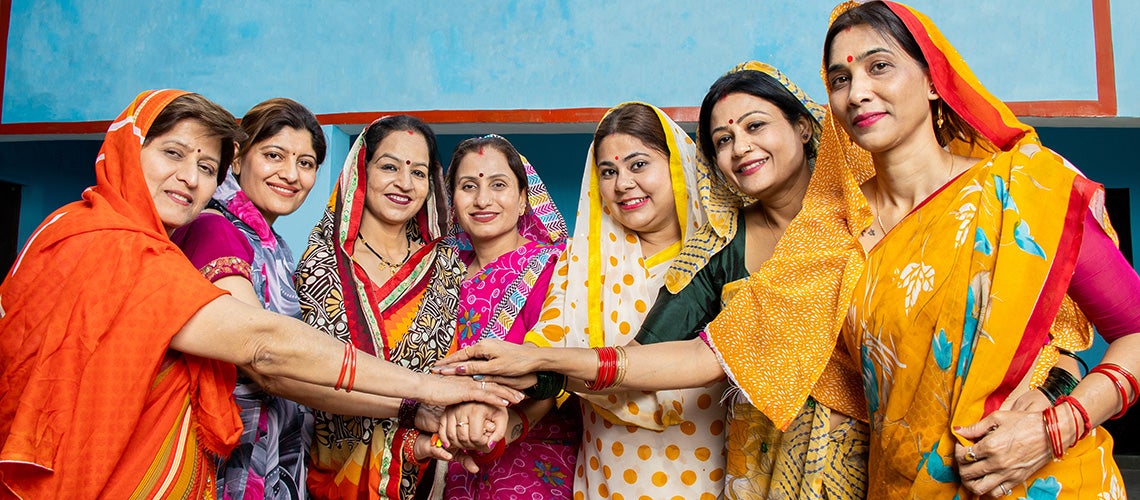
India cash transfer scheme: India is witnessing one of the largest social-policy shifts in its modern history—a quiet yet powerful movement centred on unconditional cash transfers to women. Across 12 states, more than 118 million adult women now receive direct monthly payments from their state governments. These payments are not tied to employment, school attendance, income thresholds, or poverty-line verification. Instead, they are intended to recognise the everyday work women perform inside households — labour that has historically gone unpaid and unnoticed.
This expansive India cash transfer scheme has rapidly evolved from small pilot programs into a nationwide political and welfare transformation. It is altering household power dynamics, strengthening women’s financial autonomy, influencing state elections, and reigniting debates about the economic value of domestic work.
Although these payments are modest — usually between ₹1,000 and ₹2,500 per month — their psychological, social, and political impact is far more significant than the rupee amount suggests. For many women, especially those without formal jobs, the transfers offer stability, dignity, and a sense of ownership over money that they often never had before.
This long-form article explains how the movement took shape, what research reveals about its outcomes, why critics remain sceptical, and how India’s approach differs from global cash-transfer models. It also explores whether this growing welfare strategy can reshape gender roles, financial independence, and political behaviour across India.
India cash transfer scheme The Roots of India’s Cash Transfer Scheme
The idea of paying women simply because they manage households and care responsibilities may seem radical. Yet the origins of India’s cash transfer model are rooted in older welfare practices. For decades, Indian governments focused on subsidising food grains, fuel, rural employment, and pensions. What has changed in the last decade is the recognition that women form a massive political and social group whose unpaid work sustains families and communities.
Goa: The Beginning of a New Approach (2013)
The first state to pioneer an unconditional transfer for women was Goa in 2013. This early program did not gain immediate nationwide attention, but it planted the seed for a broader discussion: should women be compensated for domestic responsibilities?
Assam: Triggering a Political Wave (2020)
The approach gained momentum just before the pandemic, when Assam introduced a scheme for economically vulnerable women. The timing was crucial — families were struggling, informal work was collapsing, and women’s unpaid workload was rising sharply. The success of the program encouraged other states to follow.
From Local Initiative to National Trend
By 2024, states such as Tamil Nadu, West Bengal, Bihar, Maharashtra, Odisha, Jharkhand, Haryana, and Andhra Pradesh had embraced similar schemes. Today, these transfers reach women from diverse backgrounds — urban homemakers, rural labourers, caregivers, widows, and women in low-income households.
The result is unprecedented: India now hosts one of the world’s largest unconditional income-support systems for women.
How the India Cash Transfer Scheme Works
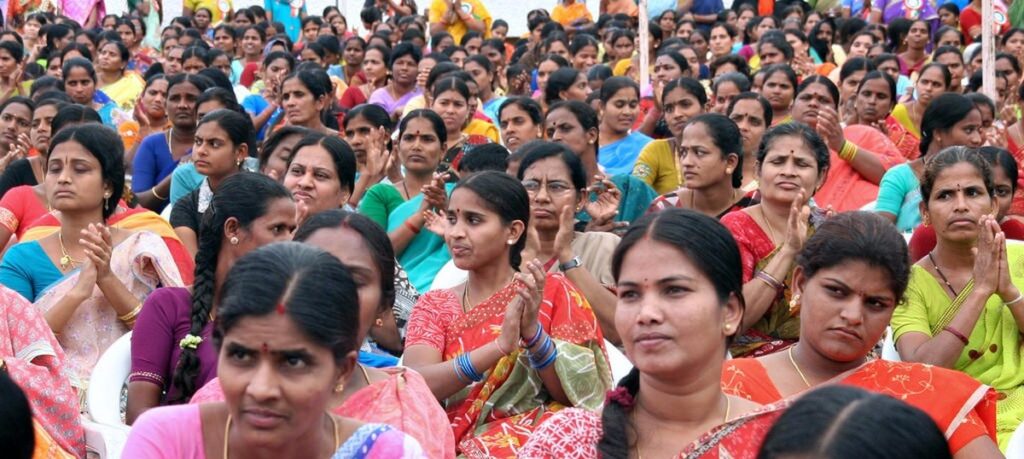
Most states offer eligible adult women between ₹1,000 and ₹2,500 per month, equivalent to 5–12% of average household income. The goal is not full economic substitution for employment but rather basic support that improves women’s financial control.
Eligibility Criteria Vary Across States
Although the schemes are universal in spirit, states apply different filters. These commonly include:
- Minimum age (usually 18 or 21)
- Income ceilings
- Exclusion of families with taxpayers
- Exclusion of households owning cars
- Landholding caps
- Restrictions for families with government employees
These filters aim to balance fiscal limits with the need to target women who lack independent income.
Why Distribution Has Become Easier
The Jan Dhan–Aadhaar–Mobile (JAM) ecosystem has created an infrastructure where 300 million Indian women have bank accounts, enabling seamless transfers with minimal leakage or corruption.
This infrastructure is one of the reasons India is able to implement such a massive program with administrative efficiency.
Why India’s Model Stands Apart from Global Cash Transfer Programs
Countries like Mexico, Brazil, and Indonesia operate large cash-transfer schemes, but most of them are conditional. Families receive support only if:
- children attend school,
- health check-ups are completed, or
- the household falls below a defined poverty line.
India’s new programs are different because they are unconditional. Women receive the money whether or not they meet behavioural conditions. This difference is central to the program’s meaning: it acknowledges women’s contributions without requiring proof of labour, poverty, or compliance.
Recognition of Unpaid Domestic and Care Work
States such as Tamil Nadu and West Bengal explicitly link transfers to the idea that women’s domestic roles deserve social and economic acknowledgment. Tamil Nadu even describes its payments as a “rights grant,” affirming that unpaid labour is a form of work deserving recognition.
How Women Use the Money: Patterns from Studies Across India
A series of studies conducted between 2023 and 2025 across West Bengal, Maharashtra, Assam, Tamil Nadu, and Karnataka reveal strong similarities in how women spend their cash transfers.
Common Expenditure Categories
Women typically use the money to pay for:
- Children’s education
- Groceries and daily food needs
- Cooking gas cylinders
- Medical bills
- Emergency expenses
- Small household repairs
- Debt repayment
- Occasional personal purchases (clothes, jewellery, toiletries, basic comforts)
These findings highlight that the India cash transfer scheme supports essential wellbeing rather than luxury.
Financial Autonomy: A Significant Social Shift
Across states, most women independently operate their own bank accounts and make spending decisions without interference.
For example:
- In West Bengal, 90% of beneficiaries manage their accounts independently.
- In Maharashtra, nearly all women who registered oversee their own accounts.
- In Tamil Nadu, many beneficiaries report reduced arguments at home because they no longer need to ask for money for small expenses.
Political Power: How Cash Transfers Influence Elections
The rise of women-focused cash transfers has transformed electoral politics.
Women Are Emerging as a Decisive Voting Bloc
Because these schemes help a group that represents nearly half the electorate, women voters are becoming politically empowered and vocal about benefits that directly impact their lives.
Bihar’s Dramatic Example
During the 2024 elections in Bihar, the government deposited ₹10,000 each into the bank accounts of 7.5 million women under a livelihood-support program. The result:
- Women voted in record numbers
- Their participation decisively shaped the election outcome
- The BJP-led alliance benefited significantly
Critics labelled it vote-buying, but the impact reflected a deeper pattern — when women receive direct economic support, their political engagement increases.
Major States Riding the Wave
- Maharashtra: 25 million women eligible
- Odisha: Scheme covers 71% of female voters
- Jharkhand, Andhra Pradesh, Haryana: Cash-transfer promises played a key role in election victories
The political message is clear: women voters are reshaping India’s electoral landscape.
Criticism and Concerns Surrounding the India Cash Transfer Scheme
Despite high public support, critics argue these programs pose risks.
1. Fiscal Burden on States
Twelve states are expected to spend nearly $18 billion on these payouts in the current fiscal year.
A PRS Legislative Research report found:
Half of these states have revenue deficits, meaning they may rely on borrowing to fund the schemes.
2. Vote-Buying Allegations
Opponents argue that unconditional transfers may be misused for political gains rather than long-term welfare planning.
3. Does Not Reduce Unpaid Workload
Research shows:
- Women’s domestic workload remains unchanged
- The scheme does not reduce gender-based divisions of labour
- Many women still desire formal employment over cash support
4. Not a Substitute for Jobs
While the transfers create temporary relief, they do not solve the fundamental issue of limited employment opportunities for women.
Understanding the Economic Value of Women’s Unpaid Work
Women in India spend nearly five hours per day on unpaid household work — a figure more than three times the time men devote. This inequality contributes to India’s low female labour-force participation.
Economists and feminist scholars have argued for decades that this work should be recognised as economically valuable. The India cash transfer scheme is the first large-scale policy mechanism that acknowledges this argument in practice.
What Research Reveals: Mixed but Important Outcomes
A growing body of research shows nuanced results.
Positive Impacts
- Increased financial autonomy
- Greater confidence and reduced marital conflicts
- More say in household decisions
- Improved quality of food consumption
- Stronger ability to manage emergencies
- Enhanced dignity and self-worth
- Political engagement increases
- No evidence of discouraging paid work
Neutral or Limited Impacts
- No reduction in unpaid care workload
- Limited awareness that payments recognise unpaid work
- Does not solve structural gender inequality
Women’s Expectations
Many women expressed that:
- payments should be higher,
- employment opportunities are still their priority,
- recognition of unpaid labour is appreciated but incomplete.
The India Cash Transfer Scheme as a Tool for Social Empowerment
Even though the transfers are modest, they create meaningful changes:
1. Financial Empowerment
Women control money without needing to ask others.
2. Dignity and Confidence
Having independent income strengthens self-respect.
3. Household Bargaining Power
Women report having a greater voice in decisions.
4. Reduced Dependence
Even a small financial cushion reduces reliance on husbands for basic needs.
5. Political Agency
Women who benefit from welfare programs are more engaged in elections and political dialogue.
Where the Scheme Falls Short
While impactful, the scheme alone cannot address deeper issues such as:
- women’s limited job opportunities
- deeply entrenched gender roles
- domestic violence
- barriers to education and skill development
- lack of childcare support
Cash alone cannot dismantle patriarchal norms, but it can provide breathing space and empowerment tools that contribute to long-term change.
What’s Next for India’s Cash Transfer Revolution?
(Focus keyphrase included: India cash transfer scheme)
Experts suggest several steps to strengthen and expand the approach.
1. Simplify Eligibility Rules
Documentation and verification challenges prevent many eligible women from enrolling. Simplified rules can increase coverage.
2. Maintain Unconditional Status
Conditions may restrict access and weaken the recognition of unpaid care work.
3. Strengthen Messaging
Awareness campaigns should emphasise that the payments acknowledge:
- unpaid domestic labour
- women’s rights
- care responsibilities
Currently, only a small percentage of beneficiaries understand the purpose of the payments.
4. Expand Financial Literacy Programs
Better financial knowledge can increase savings, budgeting capacity, and independence.
5. Create More Employment Opportunities
Women consistently report that they want jobs, not just small cash transfers.
6. Integrate with Skill-Building Initiatives
Linking cash support with optional training may strengthen economic empowerment without making benefits conditional.
Could Cash Transfers Transform Gender Norms in India?
According to feminist researchers, the scheme has the potential to shift labour patterns if accompanied by:
- economic opportunities
- social messaging
- recognition of care work
- improved policy design
If these elements align, cash transfers could gradually challenge the belief that household labour is exclusively women’s responsibility.
Conclusion: A Quiet Revolution with Far-Reaching Possibilities India cash transfer scheme
India’s unconditional cash transfer programs may appear small, but they are reshaping social welfare, political participation, and women’s autonomy. These schemes recognise the immense value of unpaid domestic labour — a recognition long overdue.
The India cash transfer scheme has already delivered:
- enhanced financial autonomy
- emotional security
- political empowerment
- improved household stability
Whether this becomes a stepping stone toward deeper gender equality or remains a politically driven welfare tool depends on how India evolves the ecosystem around it — job creation, skill development, messaging, and social transformation.
For now, the quiet revolution continues, one deposit at a time, bringing empowerment into millions of women’s homes.
