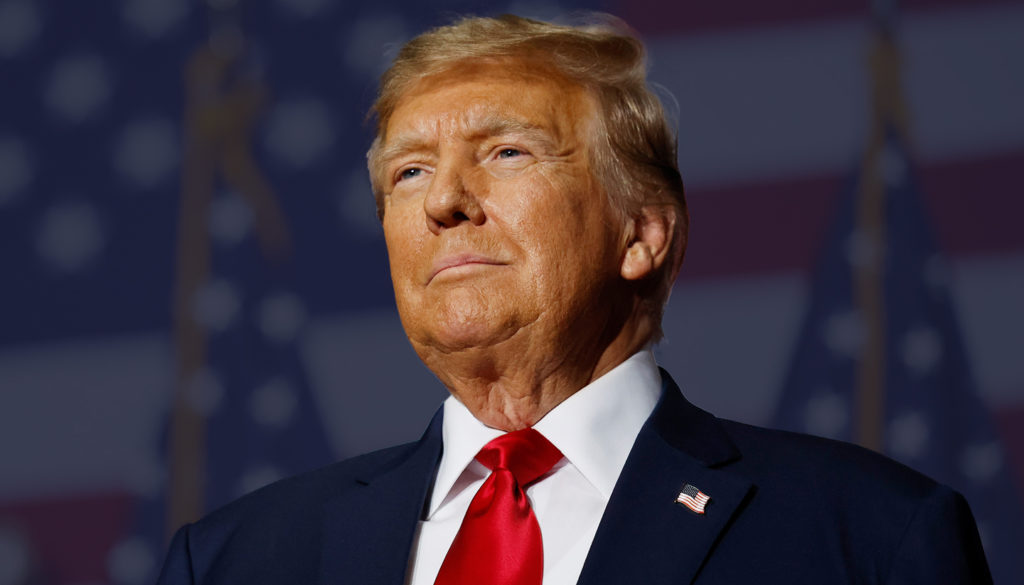
H-1B visa fee lawsuit: Twenty state governments in the US have taken the Trump administration to court over the decision to place a $100,000 fee on new H-1B visa petitions. They maintain that the charge is illegal, unnecessary, and that it negatively impacts the provision of public services. The states additionally assert that the Department of Homeland Security (DHS) unlawfully extended its powers by enacting the policy without the issuance of a formal regulation.
The matter sued by the states has become a topic of discussion in the whole country. The H-1B visa program is the core of the support system for hospitals, universities, public schools, and research institutions. A considerable number of such entities depend on foreign-skilled professionals to solve the problem of labour shortage. Consequently, the imposition of the fee has caused the spread of worries to cross-sector interaction.
In his statement, California Attorney General Rob Bonta, the leader of the multi-state coalition, said the fee endangers the existence of those public institutions. Moreover, he claimed that the administration did not have the power to impose such a heavy financial burden.
Background on the H-1B Visa Fee Lawsuit
H-1B Visa Fee Lawsuit: Trump’s Order and DHS Policy
This restriction came about by a presidential proclamation of President Trump on 19 September 2025. After 21 September, the DHS imposed the fee on H-1B applications. Along with setting the fee, the new policy authorizes the Secretary of Homeland Security to specify those petitions to whom the new rule applies and the cases to be exempted.
However, the plaintiffs contend that the wide-ranging discretion in deciding the matter infringes the federal law. Furthermore, they point out that fundamental changes in immigration policies have to go through a transparent process. These procedures involve notifying the public, taking comments from stakeholders, and seeking consent from Congress. The complaint says that the administration did not perform any of these steps when it came to the H-1B visa fee increase.
The Fee’s Scale and Its Impact
The combined fees for initial H-1B petitions are currently $960 to $7,595, paid by employers. The sudden leap to $100,000 is something that has never been heard of. The states argue that instead of a regulatory tool, it is a barrier. They also contend that the charge hampers obtaining skilled labor, which some public institutions have become dependent on.
Many public employers may no longer be able to afford the hiring of highly-skilled foreign workers due to the imposition of the fee. This, consequently, might accelerate the problem of a lack of staff in schools, community colleges, universities, hospitals, and rural health centers.
Why States Filed the H-1B Visa Fee Lawsuit
H-1B Visa Fee Lawsuit: Claims of Unlawful Action
The complaint accuses the Trump administration of:
Violating the Administrative Procedure Act
Exceeding the executive authority
Setting the fee which is out of the scope approved by Congress
Implementing a major immigration policy without formal rulemaking
The plaintiffs maintain that the case of an H-1B visa fee charge illustrates their argument that the Constitution and statutes set clear limits to their power.
H-1B Visa Fee Lawsuit: Concerns About Public Services
The states voiced their concerns about potentially dire consequences, especially for those public employers as:
Public school districts
State universities
Non-profit research institutions
Teaching hospitals
Rural medical centres
They depend on H-1B workers for filling the most difficult jobs. The fee jeopardizes their operational efficiency. By imposing the fee, “it creates unnecessary and illegal burdens on California public employers,” said Attorney General Rob Bonta. He also cautioned that the rule would aggravate labor shortages in sectors that are vital.
How the Fee Affects Schools and Universities
H-1B Visa Fee Lawsuit: Education Sector Challenges
The US education system has been struggling with severe shortages of staff over the past several years. As per the data of the 2024–2025 school year, 74% of American school districts reported that they found it difficult to fill open positions. There were numerous schools that could not get qualified teachers for:
Special education
Physical sciences
English as a second language (ESL)
Bilingual education
Foreign languages
These subjects are often accompanied by the need for specially qualified teachers. Since local candidates are scarce, schools are often forced to resort to the H-1B program. If the fee remains in place, schools may be unable to sponsor teachers on H-1B visas. Consequently, the shortages will deepen, and students’ learning will be affected, as well as the stability of classrooms.
Universities and Research Institutions
Universities depend a lot on the talent worldwide. Many foreign professionals are:
Researchers
Professors
Lab scientists
Software specialists
Technology instructors
Higher education institutions say that skilled talent is the driving force of innovation. H-1B visa fee lawsuit argues that the imposition of the fee limits how universities compete in the global market.
Impact on the Healthcare System
H-1B Visa Fee Lawsuit: Medical Workforce Concerns
American healthcare providers are dependent on H-1B professionals, especially in the country’s rural and underserved areas. In the fiscal year 2024, nearly 17,000 H-1B visas were granted for medical and health-related occupations. Close to 50% of those went to physicians and surgeons.
The US is on its way to having a shortage of 86,000 doctors by 2036. Hospitals warn that the imposition of the new fee will make the already difficult task of recruiting more challenging. Emergency care, primary care, and specialized treatments may all suffer as a result.
H-1B Doctors in Rural America
Local recruitment is often not successful in rural areas, and hence many small hospitals rely on H-1B doctors. The fee may lead to these hospitals cutting back on certain services. This, in turn, could extend waiting times, lower the number of specialists available, and limit access to life-saving care.
The H-1B visa fee lawsuit warns that the policy could destabilize the healthcare workforce at a time when it is most needed.
Legal Arguments in the H-1B Visa Fee Lawsuit
Claims Under the Administrative Procedure Act
The lawsuit alleges that:
The department of homeland security avoided mandatory rulemaking steps
The administration imposed the fee without giving the public notice
The policy is in conflict with the established immigration regulations
According to federal legislation, organizations must provide valid reasons for new policies and simultaneously allow the public to take part if the policies concern them. The plaintiffs argue that DHS did not fulfill those requirements.
Claims Under the US Constitution
Governments, aside from Congress, should not be able to decide on the structures of federal fees, states argue. The President cannot simply decide to charge people with new financial burdens. Additionally, the policy goes beyond constitutional power. The H-1B visa fee lawsuit is an indicator of the struggle between legislative and executive powers.
The States Participating in the H-1B Visa Fee Lawsuit
A total of 20 states have come together to sue. Among them are:

California
Massachusetts
Arizona
Colorado
Connecticut
Delaware
Hawaii
Illinois
Maryland
Michigan
Minnesota
Nevada
North Carolina
New Jersey
New York
Oregon
Rhode Island
Vermont
Washington
Wisconsin
Massachusetts Attorney General Andrea Joy Campbell claimed that the policy negatively impacts public services and causes institutions to sink deeper into the staffing crises.
The Role of Indian Professionals in the H-1B Programme
H-1B Visa Fee Lawsuit: Impact on Indian Workers
Indian professionals constitute the major part of the H-1B visa holders. They make a great contribution to:
Information technology
Engineering
Healthcare
University research
Scientific development
It is quite possible that the newly introduced fee will serve as a deterrent to US employers who hire workers from India. The present situation may also affect global collaboration and innovation.
Technology Companies
The American tech industry uses H-1B workers for such areas as software engineering, AI development, cybersecurity, and cutting-edge research. As a result of the imposition of the fee, companies may decide not to hire as many workers as they had previously planned. Consequently, this may lead to the slowing down of technological progress and the lessening of the sector’s competitiveness.
The H-1B visa fee lawsuit draws attention to the changes that have been made in this regard, although it strictly focuses on the legal aspects.
Public Employers vs Private Employers
The Fee Causing Creation of Uneven Burdens
Public employers say that their financial flexibility is limited. They are not profit-making entities and most of them run on fixed budgets. Therefore, a fee of $100,000 for each H-1B petition is something that cannot be absorbed in any way, even if only half of that amount.
Private companies also encounter problems. But, many of them are better off financially. Therefore, the fee is still significantly higher than any other that has been charged in the program’s history.
Cap-Exempt Institutions
State and non-profit organizations are not subjected to the annual caps, however, they still have to pay the fee. This has caused concern throughout:
Teacher preparation centres
Public universities
Non-profit research labs
State-funded hospitals
These organisations have stated that the newly introduced fee contradicts the programme’s objectives. Broader Economic Concerns
H-1B Visa Fee Lawsuit: Effect on the US Economy
Several states have made such an assertion that the policy would have economic consequences not only in their states but throughout the whole country. Highly-qualified foreign workers will eventually result in the growth of the economy if they are allowed to live and work in the US. They do this by supporting:
Education
Healthcare
Technology
Research and development
Community services
The fee may curb the recruitment of new employees and slow down the process of innovation. Besides that, the states are saying that it will lower the capacity of public institutions to meet the needs of local communities.
Workforce Development Challenges
The petition also points out that domestic talent pipelines are incapable of meeting the existing demand. The fee is not the answer to this problem. Rather, it limits the availability of skilled workers who are already in short supply.
Statements from Leadership
Rob Bonta’s Position
Rob Bonta stated, “California as the fourth-largest economy in the world understands that when skilled talents from across the globe are added to our workforce, it is what propels our state ahead.”
He also pointed out that the H-1B visa fee lawsuit is an effort to bring back fairness and lawfulness in the immigration system.
Other Statements from Attorneys General
Massachusetts Attorney General Andrea Joy Campbell also expressed similar views. She stated that the policy puts the provision of the most vital services in danger. She also suggested that public employers should not be subjected to financial penalties simply because they are addressing labour shortages.
Future Steps in the H-1B Visa Fee Lawsuit
What Happens Next?
The case will be heard in a federal court next. The states may want to see the following decisions made by the judge:
A temporary injunction
A permanent injunction
A reversal of the fee
A review of DHS authority
The result will determine the administration of future immigration policies as well as the extent of the executive power.
Possible Outcomes
Judges could: Allow the imposition of the fee
Reject the policy
Instruct the Department of Homeland Security to comply with rulemaking procedures if it decides to issue a new regulation
Change the fee structure
Since the issues that are at the center of the case are of a constitutional nature, there may be appeals.
Conclusion: H-1B visa fee lawsuit
The H-1B visa fee lawsuit is a significant legal challenge to the Trump administration’s immigration policy. Various states held the opinion that a fee of 100,000 dollars does more harm than good to sectors like education, healthcare, and public services. They also accused DHS of acting beyond its authority. This lawsuit will have a bearing on how employers look for foreign workers with the right skills. Moreover, it will determine the scope of conversations about workforce needs, executive power, and the future of US immigration policy. At present, the legal process will decide if the fee is maintained or overturned.
