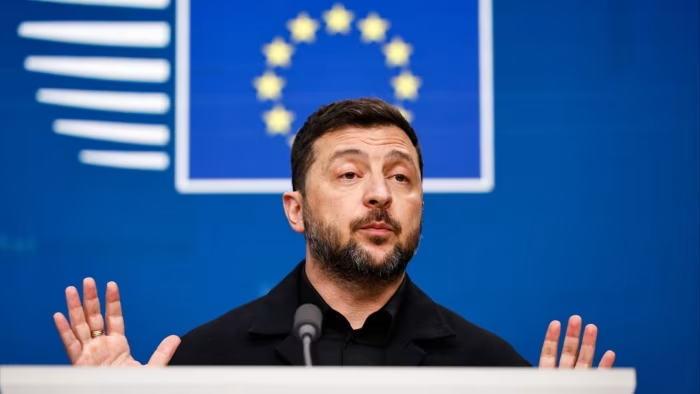
EU Ukraine Loan Deal: Union leaders have reached a significant agreement to support Kyiv by approving a €90bn loan package for Ukraine, concluding intense negotiations at a major summit in Brussels. However, they ultimately rejected the push to use frozen Russian assets, a proposal that had sparked friction among several member states.
The newly confirmed EU Ukraine Loan Deal is expected to cover Ukraine’s urgent economic and military needs for the next two years. It comes at a critical moment, as Ukraine faces severe financial shortages and escalating pressure from Russia on the battlefield. Ukrainian leaders previously warned that Kyiv could run out of essential funds by spring.
Although the European Union had considered using approximately €200bn in frozen Russian assets, disagreements over liability sharing caused the proposal to collapse. Belgium—where most of the assets are held—said it required stronger legal guarantees, which other EU members were unwilling to accept.
EU officials described the finalized loan package as a crucial step in maintaining unity and preventing internal division, especially at a time when global diplomatic efforts are intensifying.
EU Leaders Secure a Unified Position
Following a prolonged session of negotiations lasting more than 24 hours, European Council representatives announced the breakthrough. Antonio Costa, President of the European Council, shared the development on X, writing:
“We committed, we delivered.”
According to European officials, the loan will be backed by the EU’s common budget, meaning all member states collectively guarantee the funding. This structure ensures that Kyiv receives steady support regardless of internal political disputes.
Belgian Prime Minister Bart De Wever emphasized that the decision prevented potential instability within the bloc, saying EU leaders had avoided “chaos and division” by choosing a borrowing approach rather than attempting to seize Russian assets.
“We remained united,” De Wever said, underscoring the significance of solidarity amid geopolitical tensions.
Ukraine’s Urgent Financial Situation Heightened the Need for the EU Ukraine Loan
Ukraine’s government has been openly warning the international community about a rapidly approaching financial crisis. President Volodymyr Zelensky told EU leaders that without immediate financial assistance, Ukraine may need to reduce production of drones and other critical defense equipment by the spring.
EU forecasts indicate that Ukraine needs an additional €135bn to remain economically functional over the next two years. Although the €90bn loan addresses a major part of the shortfall, Ukraine will still require further help from other international partners.
The loan is structured to be distributed in installments, allowing Ukraine to maintain essential government services, infrastructure repair, humanitarian assistance, and military procurement.
Furthermore, Zelensky has consistently advocated for tapping into frozen Russian funds, arguing that Russia should bear financial responsibility for the war it started.
However, the legal and diplomatic complexities surrounding frozen assets made many EU states hesitant, leading to the current compromise through a collective borrowing program.
German Chancellor Welcomes the EU Ukraine Loan as a Strong Message to Moscow
German Chancellor Friedrich Merz had originally supported the idea of using Russian assets but ultimately endorsed the final agreement. He said the loan decision “sends a clear signal” to Russian President Vladimir Putin, emphasizing European commitment to Ukraine’s defense and territorial integrity.
Polish Prime Minister Donald Tusk also welcomed the outcome, saying EU leaders needed to “rise to this occasion” and demonstrate unwavering support for Kyiv.
Russia, on the other hand, had issued warnings to Europe throughout the week, saying any attempt to use its frozen funds would trigger retaliatory measures. Although the EU avoided such a step for now, several leaders reiterated that discussions regarding Russian assets would continue.
Macron Says Europe Should Re-Engage with Putin—Another Layer to the EU Ukraine Loan Deal
In a surprising development, French President Emmanuel Macron stated during the summit that he believed it would be “useful” for Europe to re-engage in direct discussions with Russian President Vladimir Putin.
He said Europe should seek a diplomatic framework that could open communication channels “in coming weeks.”
Macron’s comments added another dimension to the already complex situation. While the EU Ukraine Loan Deal focuses on economic support, the French leader hinted that diplomacy may need to run parallel to financial assistance to Ukraine.
However, several Eastern European nations remain skeptical of dialogue with Moscow while the war continues.
The French president did not clarify what form such engagement would take, but he stressed that communication is essential to ensure long-term stability in Europe.
Why Belgium Opposed Using Frozen Russian Assets in the EU Ukraine Loan Deal
Belgium holds the largest share of the EU’s frozen Russian central bank assets, valued at around €200bn. The country insisted that unless all EU states agreed to share liability for any legal challenges arising from the use of these funds, it could not proceed.
Because the EU has never before attempted to use another nation’s sovereign assets for military or economic funding, the legal implications are unprecedented.
Some nations—including Germany, France, and Italy—feared that seizing the assets outright could trigger global financial instability or legal backlash in international courts.
Belgium’s demands for indemnity guarantees were considered too risky by several countries, leading to the collapse of the original proposal.
The compromise:
Borrow money instead of using assets — for now.
Kyiv Calls the EU Ukraine Loan Deal a Critical Lifeline
President Zelensky released a statement thanking EU leaders for the decision, calling the loan a “vital and timely step.” He reiterated that Ukraine’s fight depends not only on military supplies but also financial stability.
“Our resilience is strengthened by every act of unity,” Zelensky stated.
Despite acknowledging the importance of the loan, the Ukrainian president maintained his position that Russia’s frozen funds should be used eventually. He said the aggressor nation should carry the financial burden of rebuilding what it destroyed.
Zelensky is also preparing for meetings with U.S. officials, where further discussions will include long-term security guarantees for Ukraine.
US–Russia Diplomatic Movements Add More Weight to the EU Ukraine Loan Deal
As the EU finalized its loan plan, diplomatic activity between the United States and Russia gained momentum.
According to U.S. sources, American and Russian officials are scheduled to meet in Miami for discussions on potential frameworks for ending the war. The meeting is expected to involve Kremlin envoy Kirill Dmitriev and American representatives Steve Witkoff and Jared Kushner.
These discussions do not indicate a formal negotiation process but highlight increasing international pressure to find pathways toward ending the conflict.
Meanwhile, Ukrainian and American delegations will hold talks in the United States over the weekend, with Zelensky seeking clarity on U.S. commitments to safeguard Ukraine against further aggression.
Economic Breakdown: Why the EU Ukraine Loan Deal Was Necessary
Ukraine faces immense financial strain due to:
● Military spending
● Infrastructure destruction
● Declining industrial output
● Reduced tax revenues
● Energy sector disruptions
● Humanitarian crises
● Mass displacement of citizens
EU economic analysts estimate Ukraine’s monthly budget deficit at several billion euros. Before this loan, Kyiv relied heavily on intermittent funding from Europe and the United States, creating unpredictable financial conditions.
The EU Ukraine Loan Deal stabilizes this situation by guaranteeing predictable financial support over a 24-month period. This allows Ukraine to:
✔ Maintain government services
✔ Continue military procurement
✔ Pay public wages
✔ Repair essential infrastructure
✔ Support displaced citizens
✔ Strengthen macroeconomic stability
This model mirrors earlier assistance plans used during the COVID-19 pandemic, where the EU borrowed collectively for recovery efforts.
How the EU Ukraine Loan Deal Works: Funding Structure Explained
Unlike previous aid packages, this loan is structured as a shared-debt mechanism. Each EU member state guarantees a portion of the loan, reducing risk for any single nation.
Key features include:
● Long-term repayment schedule
Ukraine will repay the loan over an extended timeframe, minimizing short-term pressure on its economy.
● Interest subsidies
The EU budget will cover interest payments, ensuring Ukraine does not face additional financial strain.
● Conditional disbursement
Kyiv must meet transparency and governance benchmarks to receive each installment.
● Flexible allocation
Funds may be used for humanitarian support, energy needs, military purchases, and public sector stability.
● Emergency clauses
In the event of extreme escalation, the EU may accelerate disbursements.
The structure reflects Europe’s attempt to balance solidarity with fiscal responsibility.
Political Reactions Across Europe to the EU Ukraine Loan Deal
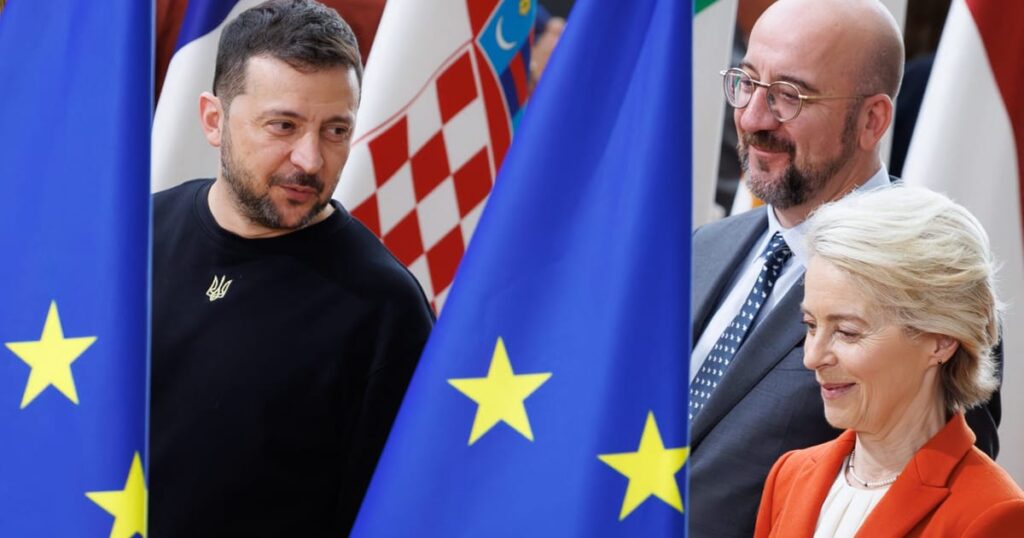
Western Europe:
Countries like France, Germany, and the Netherlands welcomed the deal, emphasizing unity and responsibility.
Eastern Europe:
Poland, Lithuania, Estonia, and Latvia expressed relief, saying the agreement ensures Ukraine’s survival against Russia’s ongoing aggression.
Southern Europe:
Italy, Spain, and Portugal supported the borrowing model, noting that direct use of Russian assets could create financial instability.
Central Europe:
Some officials expressed concerns about rising debt levels but ultimately backed the agreement to maintain EU cohesion.
Despite disagreements, all sides recognized the importance of preventing internal fractures during a major European security crisis.
The EU Ukraine Loan Deal and Its Global Impact
The loan agreement is expected to influence several geopolitical dynamics:
1. Russia’s response
Moscow condemned the plan but signaled relief that its frozen assets were not seized—yet.
2. US involvement
Washington continues to push for a negotiated settlement but acknowledges Ukraine requires strengthened financial backing.
3. Asia’s watching
China and India are monitoring the EU’s actions closely, as the treatment of frozen assets could set global precedents.
4. NATO relations
The loan reinforces Europe’s commitment to Ukraine but also underscores reliance on U.S. leadership for military coordination.
5. Global markets
Investors responded cautiously, indicating concern about long-term debt implications but appreciation for political stability within Europe.
Future Outlook: What Comes After the EU Ukraine Loan Deal?
● More negotiations on frozen Russian assets
EU leaders intend to revisit the idea later in 2025 once legal studies and international consultations progress further.
● Potential additional funding
The €90bn loan may not cover all of Ukraine’s financial needs, meaning more international support will be required.
● Continued diplomatic activity
Talks in the United States and Europe suggest major powers are exploring broader frameworks for eventual negotiations with Russia.
● Military assistance packages
Europe is expected to announce additional defense support alongside the loan to help Ukraine maintain battlefield readiness.
● Economic reconstruction plans
Long-term rebuilding efforts will likely involve international institutions such as the IMF, World Bank, and G7 nations.
Marks a Critical Moment for Europe and Kyiv
The EU Ukraine Loan Deal represents one of the most significant financial decisions the bloc has taken since the beginning of the conflict. Although leaders failed to agree on using frozen Russian assets, their united decision to approve a €90bn loan demonstrates Europe’s commitment to Ukraine’s survival.
For Kyiv, the deal provides essential breathing room during one of the most challenging phases of the war. For Europe, it reinforces unity at a time when geopolitical pressures are mounting from all sides.
As diplomatic efforts continue in the United States and Europe, the loan serves as a financial anchor supporting Ukraine’s government, armed forces, and citizens. It also sends a clear message to the Kremlin: despite disagreements, the EU remains firmly aligned in backing Kyiv.
The next two years will determine how effectively Ukraine can use these funds to maintain stability, defend its territory, and prepare for future reconstruction. With global powers increasing diplomatic engagement, the EU Ukraine Loan Deal may become a central component of broader strategies shaping the endgame of the conflict.
