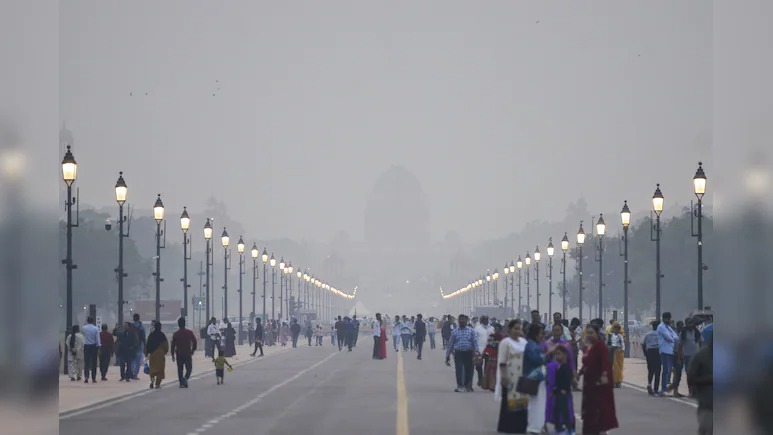
Delhi air quality crisis: New Delhi — On a day when dense smog blanketed the capital, turning the skyline gray and air unbreathable, official air quality data suddenly vanished from public access. Millions of residents were left uncertain about the severity of the pollution, raising fresh questions about transparency and preparedness.
The disruption occurred barely a day after mass protests erupted across Delhi, where citizens accused authorities of manipulating air pollution data and eroding trust in government reports. Despite worsening visibility and rising pollution levels, all Air Quality Index (AQI) updates stopped around noon on Monday.
CPCB Data Feed Suspended at Noon
According to the Central Pollution Control Board (CPCB), the last recorded AQI was 345 at 12:15 p.m. via its Sameer mobile app and official website. Shortly after, both platforms went offline. Officials later cited a “technical glitch” as the cause of the data blackout and assured that restoration efforts were underway.
Meanwhile, residents continued to battle choking conditions as visibility dropped sharply, and the smell of smog filled the air. Motorists on major routes such as NH-9 near Ghaziabad reported poor visibility and slow-moving traffic throughout the day.
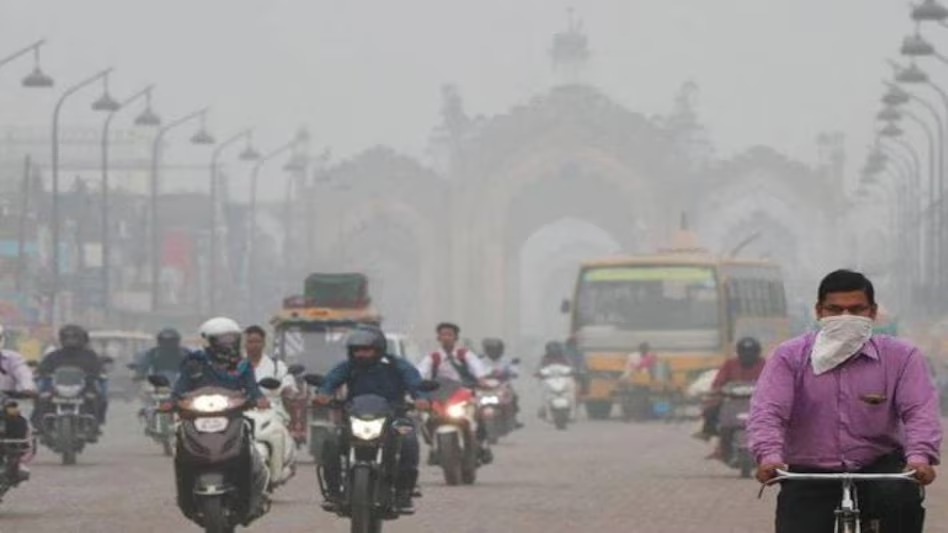
CAQM Orders Emergency Review: Delhi air quality crisis
In response to the data disruption, the Commission for Air Quality Management (CAQM) immediately activated its sub-committee under the Graded Response Action Plan (GRAP) to conduct an urgent review. Officials stressed that despite the outage, real-time monitoring and enforcement of pollution control measures were continuing in the background.
Sunday had already seen the worst air of the season, with AQI soaring to 391 by 10 a.m. — officially placing Delhi’s air in the “Severe” category. However, despite visible deterioration on Monday, no updated data was made available to residents, leaving many anxious and uninformed.
Previous Outages Raise Concerns
This was not the first time Delhi faced a sudden blackout in pollution data this season. On October 26, the AQI updates stalled for over 11 hours, delaying the CPCB’s daily bulletin until late night. The following day, a 12-hour gap was recorded before systems were declared fully functional on October 27.
These repeated disruptions have raised doubts among citizens and environmental experts alike, who argue that timely and accurate AQI reporting is essential for implementing effective pollution control strategies.
GRAP Restrictions and Ongoing Measures: Delhi air quality crisis
Despite deteriorating conditions, the CAQM decided not to escalate to GRAP Stage 3 restrictions, citing a minor improvement in the 24-hour average and no immediate severe weather forecast. Stages 1 and 2 of the protocol — which include bans on construction dust and waste burning — remain active across the National Capital Region (NCR).
Authorities have urged residents to limit outdoor exposure, use N95 masks, and rely on indoor air purifiers wherever possible until conditions improve.
Public Reactions and Health Concerns
Frustration mounted across social media as citizens shared images of hazardous smog and demanded accountability. Environmental activists criticized the CPCB’s technical failure, warning that such lapses could endanger lives and delay crucial policy responses.
Doctors across Delhi have also reported a spike in respiratory issues, particularly among children and the elderly. Hospitals have advised citizens to stay indoors and avoid early morning walks until the AQI stabilizes.
Delhi air quality crisis
The sudden suspension of Delhi’s air quality updates amid severe smog has deepened public mistrust and highlighted the capital’s growing environmental crisis. While the CPCB promises to restore real-time data soon, citizens continue to gasp for clean air — and for transparency.
