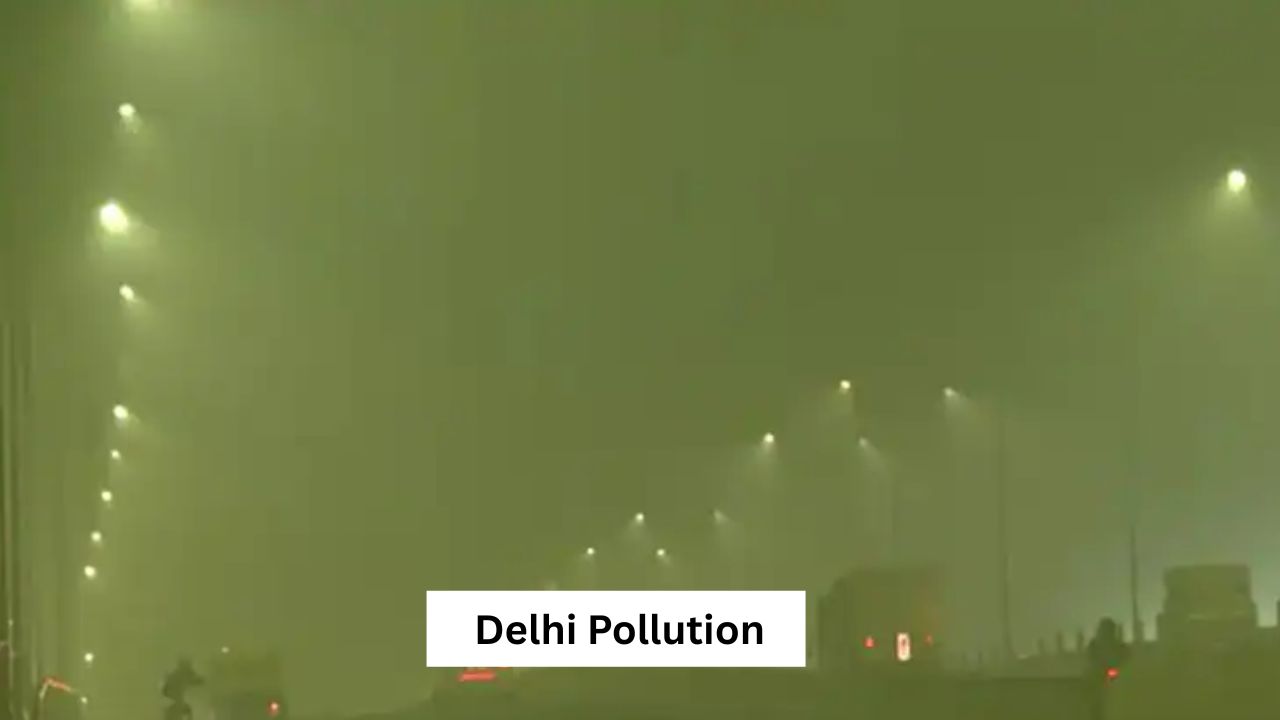
Delhi air pollution reached alarming levels on Sunday morning as a thick blanket of smog engulfed the national capital. According to the Central Pollution Control Board (CPCB), the city recorded an Air Quality Index (AQI) of 462 at 6 a.m., placing it firmly in the severe category. All 40 monitoring stations across Delhi showed red indicators, confirming that air quality had deteriorated simultaneously across every region of the capital.
Rohini, Jahangirpuri, and Vivek Vihar were among the worst affected locations, with AQI readings approaching the upper threshold of the national scale. The persistent smog reduced visibility in several areas, forcing commuters to drive slowly with headlights on even after sunrise. The spike in pollution once again highlighted how rapidly Delhi air pollution worsens during winter months when weather conditions trap pollutants close to the ground.
Delhi Air Pollution Reaches Severe Category Across All Monitoring Stations
All Stations Record ‘Severe’ Levels of Delhi Air Pollution
Delhi’s air quality dipped further as all 40 air quality monitoring stations registered severe pollution levels. Rohini recorded an AQI of 499, nearly touching the upper limit of India’s AQI scale. Jahangirpuri and Vivek Vihar reported readings of 495, driven primarily by elevated particulate matter (PM2.5) concentrations.
PM2.5, known for its ability to enter the lungs and bloodstream, remained the dominant pollutant across the city. With these concentrations surging overnight, Delhi awoke to air that was hazardous even for healthy individuals.
The CPCB classified AQI readings from 401 to 500 as severe, meaning exposure poses serious risks to public health. Prolonged time outdoors during such conditions can aggravate respiratory problems, increase hospitalization rates, and affect vulnerable groups such as children, senior citizens, and heart or lung patients.
Visibility Drops as Thick Smog Covers the Capital
Parts of East Delhi, including Patparganj, recorded an AQI of 488, with residents encountering sharply reduced visibility due to dense smog. Early-morning visuals showed motorists navigating slowly on the roads with headlights switched on. The presence of heavy smog also contributed to an increase in incidents of eye irritation, throat discomfort, and persistent cough.
According to meteorological observations, the stagnant air and increased moisture content played a crucial role in trapping pollutants near the surface. This combination allowed smog formation to intensify overnight.
What the AQI Means and How It Is Calculated
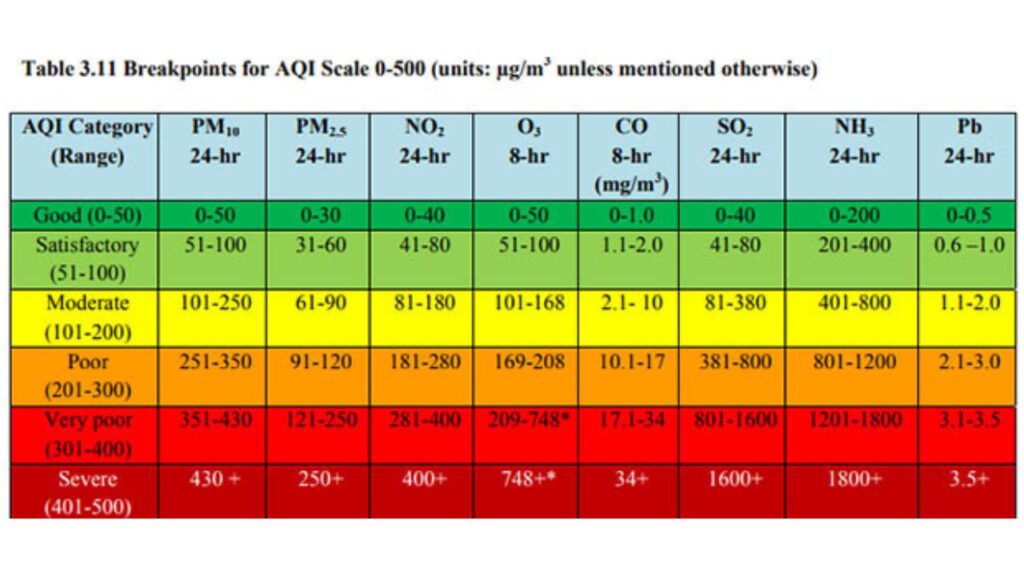
The Air Quality Index is designed to communicate air pollution levels in a simple and clear manner. It evaluates eight key pollutants, including:
- PM10
- PM2.5
- Ozone (O3)
- Sulphur dioxide (SO2)
- Nitrogen dioxide (NO2)
- Carbon monoxide (CO)
- Lead (Pb)
- Ammonia (NH3)
The CPCB classifies AQI into six categories:
- 0–50: Good
- 51–100: Satisfactory
- 101–200: Moderate
- 201–300: Poor
- 301–400: Very Poor
- 401–500: Severe
An AQI in the severe range signals a serious public health threat. Even healthy individuals may experience breathing discomfort. Sensitive groups are strongly advised to avoid outdoor activities, especially exercise.
