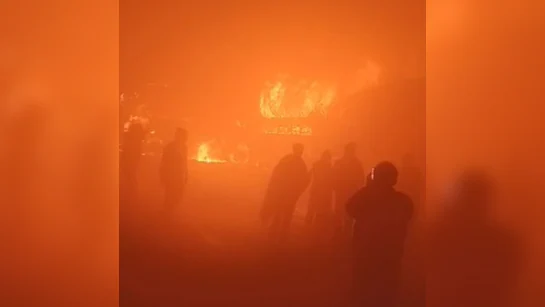
A major Delhi-Agra Expressway accident occurred in Mathura on Tuesday morning after dense fog caused a multi-vehicle collision involving seven buses and three cars. The crash resulted in four deaths and left at least 25 people injured. The incident caused significant disruption on one of India’s busiest national expressways. Authorities responded immediately with rescue teams, medical support, and fire control units.
This report provides a complete, fact-based overview of the accident, the rescue operations, and the response from local officials. It also examines the impact of dense fog on road safety and explains how such conditions often contribute to severe winter accidents across northern India.
Overview of the Delhi-Agra Expressway Accident
The Delhi-Agra Expressway accident occurred early in the morning when visibility dropped sharply due to dense fog. Several vehicles collided almost simultaneously, which led to a chain reaction involving ten vehicles. Due to the impact, some of the cars caught fire. Passengers rushed out in panic as emergency services moved into action.
According to initial reports, four passengers died at the scene. Meanwhile, at least 25 others suffered injuries and were taken to nearby hospitals for treatment. Officials confirmed that none of the injured were in critical condition.
The collision created a long traffic jam on the expressway. As the rescue teams reached the location quickly, they were able to prevent further injuries. Fire services controlled the flames, while medical teams transported the injured to nearby health facilities.
Police Statement on the Delhi-Agra Expressway Accident
Senior Superintendent of Police (SSP) Shlok Kumar provided detailed information about the incident. He explained that poor visibility led to the multi-vehicle collision. He added that dense fog continued to remain over the expressway even after the rescue operations began.
According to the SSP, search and rescue efforts were nearly complete at the time of his statement. Fire service units, local police, and administrative teams were brought together to manage the situation and provide quick assistance to the injured.
Key points from SSP Shlok Kumar’s statement:
- Four people lost their lives in the accident.
- Twenty-five people were injured but none were critically wounded.
- Seven buses and three cars were involved in the collision.
- Fog and low visibility were the primary causes.
- Rescue operations were carried out promptly, preventing further casualties.
He also said that stranded passengers were being transported to their homes using government-arranged vehicles. This ensured that no one remained at the accident site without support.
District Magistrate’s Response to the Delhi-Agra Expressway Accident
Mathura District Magistrate (DM) Chandra Prakash Singh described the incident as “very unfortunate.” He confirmed the casualties and provided a summary of the relief operations. According to the DM, immediate measures were taken to manage the situation, including the deployment of fire tenders and ambulances.
Highlights from the DM’s briefing:
- More than 12 fire tenders were deployed to control the flames.
- Over 14 ambulances reached the scene quickly.
- Injured passengers were taken to C.H.C. Baldev and the District Hospital.
- All injured individuals were declared out of danger.
- Relief work continued throughout the day.
The DM stressed that the cause of the Delhi-Agra Expressway accident would be investigated later. For now, the focus remained on supporting survivors and ensuring medical care.
How Dense Fog Causes Crashes Like the Delhi-Agra Expressway Accident
Fog is a major cause of winter accidents in northern India. During December and January, fog becomes thicker and visibility often drops to only a few meters. As a result, drivers struggle to see obstacles, vehicles, or dividers in time.
The Delhi-Agra Expressway accident followed this pattern. Sudden patches of dense fog made it difficult for drivers to maintain safe distances. Even a small collision can trigger a larger pile-up, especially on highways where vehicles move at higher speeds.
Why fog leads to dangerous accidents:
- Drivers cannot judge speed or distance accurately.
- Brake lights and indicators become harder to see.
- Sudden slowdowns create chain collisions.
- Vehicles may skid due to moisture on the road.
- Panic among drivers increases the risk of secondary collisions.
In addition, buses carrying large groups of passengers are more vulnerable because they require more distance to stop safely.
Similar Fog Accident on the Delhi-Mumbai Expressway One Day Earlier
The Delhi-Agra Expressway accident came just one day after another major collision caused by dense fog. On Monday morning, around 5:00 am, nearly 20 vehicles collided on the Delhi-Mumbai Expressway. Four people, including two police officers, died in that crash. At least 15–20 others sustained serious injuries.
These back-to-back accidents demonstrate how hazardous winter fog can be on national expressways. Despite repeated warnings from authorities, drivers often underestimate the dangers of low visibility. Fog accidents continue to be one of the leading causes of winter road fatalities.
Detailed Timeline of the Delhi-Agra Expressway Accident
To explain the event clearly, here is a chronological breakdown of the incident:
6:00 AM – Fog Intensifies
Reports indicate that dense fog settled over the Mathura region just before sunrise. Visibility dropped to extremely low levels.
Shortly After – First Vehicles Collide
A sudden slowdown on the expressway caused the first collision. Due to low visibility, buses and cars behind could not react in time.
Multiple Collisions Occur
Within moments, several more vehicles crashed into the pile-up. Seven buses and three cars were involved.
Fire Breaks Out
Some cars caught fire due to the impact. Passengers rushed out immediately.
Rescue Teams Arrive
Fire tenders, ambulances, and police teams reached quickly, preventing further damage.
Injured Taken to Hospitals
About 25 people were shifted to medical facilities. All were reported to be out of danger.
Traffic Diversions Begin
The expressway was partially blocked. Authorities directed vehicles to alternative routes.
Relief Work Continues
Officials arranged for stranded passengers to return home. Firefighters controlled the blaze.
This timeline helps understand how fast such accidents escalate, especially under foggy conditions.
Eyewitness Accounts and Passenger Reactions
Passengers described sudden fog patches that reduced visibility drastically. Many said they noticed vehicles stopping only at the last moment. Some buses attempted to slow down, but the vehicles behind collided before they could react.
Although panic spread when vehicles caught fire, passengers appreciated the rapid response by rescue teams.
One passenger mentioned that the fire tenders arrived “within minutes,” which prevented additional casualties.
Another commuter stated that the fog was so thick that even tail lights were barely visible.
These accounts match the official explanation that dense fog led to the Delhi-Agra Expressway accident.
Role of Emergency Services in Controlling the Situation
Emergency services were crucial in preventing further damage. The coordinated response ensured timely evacuation and treatment.
Key contributions:
- Firefighters controlled the flames and prevented them from spreading to nearby vehicles.
- Ambulance teams provided immediate first aid, reducing the severity of injuries.
- Police officers managed traffic, ensuring safety for other commuters.
- Local administration arranged transportation for passengers who were not injured.
Such coordinated responses reduce the risk of secondary accidents, which are common in fog-related crashes.
Medical Treatment and Condition of the Injured
According to official statements, none of the injured passengers suffered critical wounds. Most of the injuries were caused by impact and sudden braking.
The injured were taken to:
- C.H.C. Baldev Hospital
- Mathura District Hospital
Doctors in these hospitals provided preliminary treatment. Later, some passengers were moved to larger health centers for further observation.
Authorities confirmed that all injured individuals were stable. They also said that arrangements were being made for passengers to reach their hometowns safely.
The Delhi-Agra Expressway Accident and Road Safety Concerns
This accident highlights growing concerns about expressway safety during winter. The incident shows why fog-related precautions are essential.
Although expressways are designed for fast movement, they can be extremely dangerous during fog. Drivers often travel at high speeds because conditions appear normal until they hit a sudden patch of low visibility.
Common safety risks include:
- Inability to slow down in time
- Reduced reaction time
- Incorrect judgment of road distance
- Overconfidence while driving in poor weather
The Delhi-Agra Expressway accident has renewed discussions about installing advanced fog warning systems.
Weather Patterns Contributing to Fog on Expressways
Fog develops when moisture condenses near the ground as temperatures drop. Highways built near rivers or open fields experience stronger fog.
The Delhi-Agra and Delhi-Mumbai expressways often face dense fog between November and January. This is due to:
- Low nighttime temperatures
- High moisture in the air
- Lack of wind movement
- Pollution particles encouraging condensation
Because of these conditions, commuters on these routes experience significantly reduced visibility.
Government Initiatives to Prevent Future Fog Accidents
Although investigations will confirm the exact cause of the crash, authorities have already been working on several road safety measures.
Some ongoing initiatives include:
- Installation of fog lights along highways
- Use of anti-fog signage
- Display boards showing real-time visibility updates
- Speed restrictions during winter
- Increased patrol presence during peak fog hours
Officials emphasize that driver awareness remains equally important.
Why the Delhi-Agra Expressway Accident Is a Wake-Up Call
The severity of the crash demonstrates how quickly conditions on expressways can change. Even though emergency services reacted promptly, the accident still resulted in fatalities.
This places responsibility on both drivers and road authorities to follow safety guidelines. Fog should never be underestimated.
Safety Tips for Drivers During Fog Season
To prevent accidents like the Delhi-Agra Expressway accident, authorities recommend the following precautions:
- Drive slowly and maintain a safe distance.
- Use fog lights instead of high beams.
- Follow road markings to stay in lane.
- Avoid overtaking in poor visibility.
- Stop at safe points if visibility becomes extremely low.
- Turn on hazard lights if stopping on the roadside.
These measures significantly reduce the risk of collisions.
Investigation and Next Steps
Police officials confirmed that a detailed investigation will begin after rescue operations conclude. The investigation will examine:
- The exact sequence of collisions
- Vehicle speed at the time of impact
- Road conditions
- Visibility levels
- Driver statements
- CCTV and toll booth footage
This will help determine whether any driver negligence occurred and how future accidents can be prevented.
Traffic Impact After the Delhi-Agra Expressway Accident
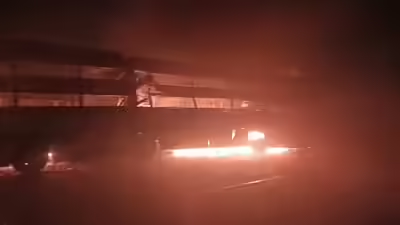
The crash caused long delays on the expressway. Traffic police issued advisories and redirected vehicles to alternative routes.
Although the congestion was severe, the road was gradually cleared after rescue teams shifted the damaged vehicles
Passenger Support and Relief Measures
Authorities arranged government buses to transport stranded passengers. They also helped passengers retrieve their belongings from the damaged vehicles.
Relief work continued throughout the day to ensure all passengers received the necessary assistance.
As winter fog continues across northern India, drivers are urged to stay cautious, reduce speed, and follow safety guidelines. Preventing such accidents requires a collective effort from authorities, commuters, and road management systems.
The Delhi-Agra Expressway accident serves as a painful reminder of how dangerous winter fog can be. Despite strong emergency response, four people died and 25 were injured in the multi-vehicle collision. Authorities acted quickly, deploying fire tenders, ambulances, and police teams to manage the crisis. Although the cause of the collision was linked to dense fog, a detailed investigation will confirm all contributing factors.
