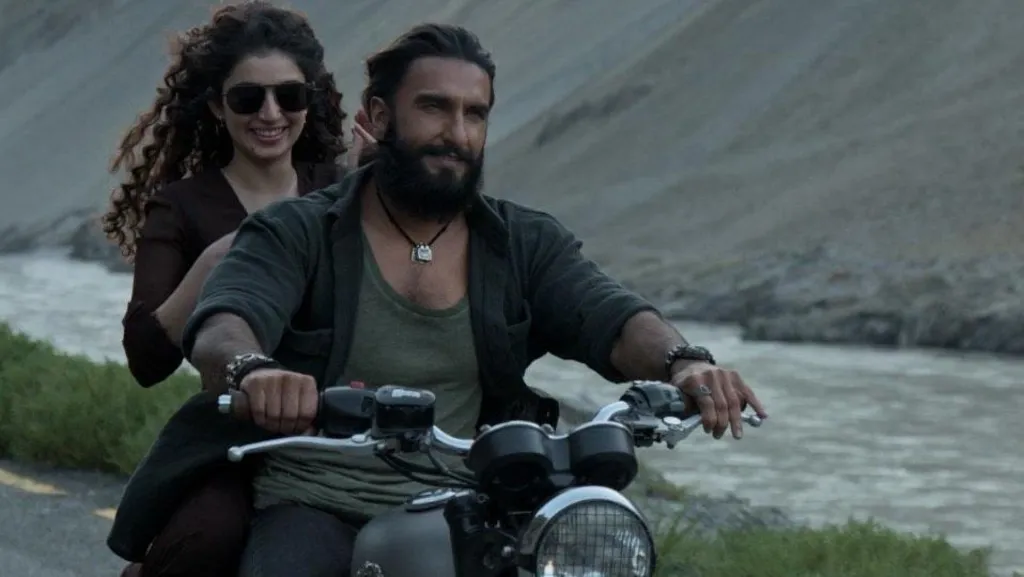
A most recent Bollywood film has served as a means to an open-door of conversations all over India and Pakistan. One of the critics called Dhurandhar a thrilling, espionage drama of high stakes in which he/she praised the film for its thrilling, sequences of action, lively storytelling, and emotional depth.
However, the movie upset the audience as it showed the India-Pakistan tensions quite aggressively.
The resulting Bollywood spy film debate has been continuously growing around the time of the movie release, thereby, it is one of the most talked-over films of the year.
The film narrates Ranveer Singh as Hamza, an intelligence agent from India on dangerous undercover in Karachi. His role gets entangled with the wars of the street,
espionage networks, and a long-standing grudge of mistrust between two countries which dates back to years.
Since last week, the film has released to the world with Dhurandhar eliciting a positive response mixed with harsh criticism where audiences and critics sharply contradict each other in terms of plot and political themes.
Intense debates about the film have been taking place on social media platforms, public speaking, and review websites. The supporters present the scale of production, actors’ good performances, and detailed world-building as their main arguments.
Opponents level the movie depicting Pakistan, political messaging, and use of the real events as their main criticisms. The split mirrors the current trend in Indian films, where films with a political theme go on to become the cultural front-line.
Bollywood Spy Film Debate Rise After Dhurandhar’s Release
The reaction of the first wave was only a moment after the launch of Dhurandhar in cinemas. People present their praises to intense scenes of action, realistic fight choreography, and Ranveer Singh’s dedicated performance. The emotional evolution of the hero and his mental struggles also got the spotlight. These components facilitated the movie to catch the eye of the thriller action fans.
Nevertheless, the criticism was not far behind. Some of the viewers and commentators, had the opinion that the film is heavy with nationalist tones. They doubted the representation of Pakistan, the employment of violent scenes, and the intertwining of real historical events with fictitious characters. As a result, this mix stirred up debates about the divide between entertainment and political narrative. These contradictory answers have increased the level of the Bollywood espionage film debate which as a result has come to be a trendy discourse on the internet.
Aditya Dhar said
In conversation with the media, director Aditya Dhar said that the movie is a paced espionage action story. He even stressed the fact that it is a work of fiction. Nevertheless, the viewers associate incidents to reality, real political events, and the conflict between India and Pakistan that has been going on for quite a while. The employment of archival footage and the dramatization of references to the past wars intensified these connections, thus, the movie has been given a more political side than the director initially anticipated.
Background of the Bollywood Spy Film Debate and the Director’s Vision
Aditya Dhar is recognized as a filmmaker whose films are based on real military operations and politically significant events. His first film, Uri: The Surgical Strike, became a big hit nationwide and made him known as a director who is not afraid of sensitive issues. The movie was a dramatization of the Indian military action of 2016 and was mostly lauded for its technical aspects.
In 2024, Dhar was a co-producer of Article 370, a political drama about the revocation of Jammu and Kashmir’s autonomous status. That film, too, became a source of public discussion and political commentary.
His style of filmmaking usually is a mixture of patriotism, emotional intensity, and large-scale action.
With Dhurandhar, Dhar looks to have not only amplified that method but also delved further deep into the complicated India-Pakistan relationship. Those who knew his previous works anticipated that there would be a strong nationalist message. The expectation played a role in the rapid expansion of the Bollywood espionage film debate as viewers tried to figure out the director’s intentions. Nevertheless, Dhar mentioned that it’s a made-up espionage thriller with the main intention of providing viewers with an enjoyable experience.
He also explained that the film shouldn’t be seen as a representation of real military decisions. Still, the blending of real audio fragments, well-known political events, and historical references made it difficult to discern where the facts ended and the fiction began—an issue that most of the critics talked about.
How Dhurandhar Builds Momentum in the Bollywood Spy Film Debate
Dhurandhar has been the center of a heated debate, primarily because of the way it shows the city of Karachi. It pictures the city as a place full of violence, which is also unpredictable, and controlled by gangs, kidnappings, and murder for revenge. The version of Karachi from the film is one in which Hamza is always in trouble, thus the director raises the emotional aspect of his mission. However, the depiction, according to critics, feels as if it is overly dramatized and only from one perspective.
Uday Bhatia, a film critic, pointed out that the movie shows Pakistan as a hostile, unlawful, and unstable place that is the root cause of the crisis. Critics say that such portrayals reinforce the already existing stereotypes that find their way frequently into political dramas. According to them, this pattern contributes to narratives that see geopolitics in simple terms.
However, a few reviewers disagree with this opinion. Vineeta Kumar from India Today remarked that Dhar tried to present a more complex side of it. She argued that the political intricacies, the civil war, and the existence of different power groups in Pakistan were depicted with unexpected subtlety. This opposing argument added to the depth of the Bollywood espionage film debate as the audience viewing the film through different perspectives weighed in.
The fans of action and general public, on the other hand, were mainly concerned with the story being told visually. They talked about the sensational aspect of the fights, the emotional music, and Hamza’s character arc. To them, the film works as mere entertainment. This opinion has brought about yet another split between the critics and the general public.
Pakistan’s Response and Its Role in the Bollywood Spy Film Debate
Even with bans and restrictions on Indian movies, Bollywood is still a favorite of the public in Pakistan. Most of the fans get the new releases by means of VPNs or non-official streaming platforms. Dhurandhar was no exception and followed the same pattern. This led to curiosity because of the topic.
The reactions to the movie in Pakistan varied. On the one hand, some viewers were attracted by the characterizations and technical aspects. On the other hand, some were against the depiction of the local gangs, political parties, and history. Dawn newspaper published reviews that pointed out the factual inaccuracies and the difficult depictions of the Pakistani society.
One particular issue that the Pakistan Peoples Party (PPP) raised as a point of criticism was the depiction of a rally for the PPP in the film. It was complete with flags and pictures of Benazir Bhutto. The party leaders termed it “a malicious distortion” and confided that the film might mislead the viewers into believing the PPP’s support for the militancy link. This dispute helped fan the Bollywood spy film debate on Pakistani social media.
Moreover, the Pakistan content creators expressed their opinions too. The majority of them stated that the complicated gang history of Karachi had been simplified for the purpose of the movie. However, quite a few of them acknowledged that the viewers could still appreciate the film’s
Historical Context Behind the Bollywood Spy Film Debate
One of the major characteristics of the Indian cinema is that it has been a reflection of the politics and the historical moments of the time. The production of spy thrillers, war dramas, and national security stories has become common. These types of movies have a large commercial success; among them are The Kashmir Files and The Kerala Story. They evoke a controversy about political messaging and historical interpretation.
Mixing of fact, fiction, and ideology is not new for Bollywood. Proponents of the concept argue that these films do what the rest of the cinema leaves aside – they raise the barely spoken issues. Opponents maintain that the stories suffer from a lack of a point of view and that the events are too complicated to be simplified.
The trend with Dhurandhar also went on. Apart from the plot, the movie is a montage of references to the 2001 Parliament attack, the 26/11 Mumbai terror attack, and the 1999 plane hijacking. These allusions gave the impression that the story was bigger and much closer than before. Nevertheless, reviewers expressed their doubts over the appropriateness of the use of real footage and audio in a fictional context. This issue added another layer to the Bollywood spy film debate, which extends beyond the question of film ethics to filmmaking ethics.
Bollywood Spy Film Debate Grows as Audiences Enter the Conversation
The most significant factor in the debate evolution is the discussion of the issue by the public. Communication via social media channels has become the main venue where the interlocutors of the issue, i.e. the fans, the critics, and the influencers, exchange their opinions. Within a few hours of the release, Dhurandhar related hashtags were trending.
Supporters were raving for the film’s action sequences and patriotic themes. To them, Ranveer Singh’s performance was the most noteworthy and they applauded the production scope. The film was, in their opinion, a deliverer of great fun to the audience.
Contrarily, some reviewers closely hit a target and thus got on the wrong side with the public. Subsequently, the Film Critics’ Guild came up with a reaction to this event in the form of a statement, which essentially backed critics and encouraged condemnation of the perpetrator(s). The guild underlined the role of independent criticism as a hallmark of a safe film environment. This event has elevated the Bollywood spy film debate to the level of discourse on the freedom of speech and decent ways to differ in opinion.
In spite of the conflicts, the number of moviegoers has been impressive. As a result, the film was able to fast become one of the top hits of the year, thus demonstrating that the audience ought to and indeed will play a crucial role together with the star power for the commercial success.
Why the Bollywood Spy Film Matters for the Film Industry
The Dhurandhar reaction exposes significant tendencies in the Indian film industry:
1. Attention is drawn to political narratives
Films dealing with national issues or past events usually pull in big audiences. Their themes motivate the audience to take part in discussions, thus enhancing the reach.
2. Spy thrillers are still in demand
Indian viewers have maintained their desire for such movies about the work of spies in the middle of cross-border issues. Such stories have the power to emotionally engage the audience and arouse their national pride.
3. Movies commonly serve as a reflection of culture
Consumers look at films through their personal and political experiences. Consequently, movies have the potential to become a focus of national debate in a short period.
4. Discussions are becoming louder due to digital platforms
Social media is responsible for the instant commentary of every major work. Fans and critics do this work in real time.
Taken together, these points explain why the Bollywood spy film debate associated with Dhurandhar has been the center of public attention.
Entertainment vs. Interpretation in the Bollywood Spy Film
A number of people viewing the movie claim that the latter ought to be regarded solely as a work of fiction. They maintain that filmmakers are given the liberty to extend, dramatize, and fictionalize by one creative work. According to them, movies are meant to be the medium that delivers the engaging stories. This argument supports the notion that not all creativity has to coincide with historical facts.
Critics affirm the opposite, especially when real happenings are involved. Their point is that people frequently accept what they see in the movies as the truth. The incorporation of the terrorist attack on the 26/11 and the assault on Parliament is done to evoke the viewers’ emotions. However, if these events are combined with fiction characters, then the audience might get mixed up in terms of the real history.
This problem has only deepened the Bollywood spy film debate in that it raises questions about accountability principles in the case of filmmakers. The debate also sheds light on the influence of cross-border narratives on cultural perceptions. For the last few decades, films from both India and Pakistan have been depicting each other as adversaries. Such impressions form the audience’s interpretations once the show is over.
Impact of the Dhurandhar Controversy on Future Films
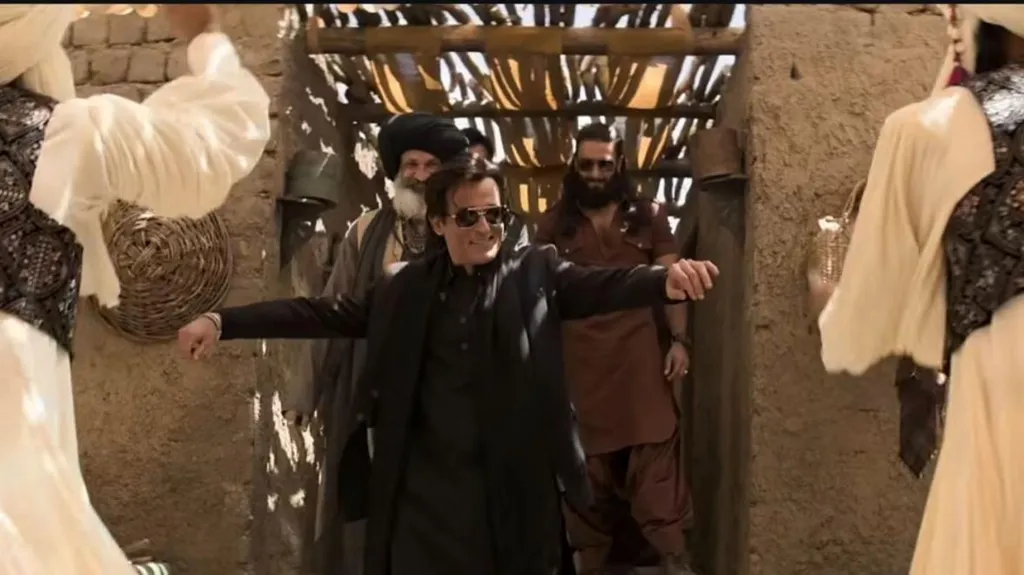
The reaction to Dhurandhar could lead to changes in the following ways of Bollywood productions:
More depicting of real incidents with caution
Directors might use more obvious disclaimers and cite less direct references to the tragic events of sensitive incidents.
Increasing fascination with political thrillers
Contrary to the controversies, audiences are still willing to watch such films. Therefore, producers can take decisions to invest more in this genre.
More efficient fact-checking by critics
As audiences demand more, critics may become more vigilant about the accuracy of the historical details.
Worldwide interest
Films with themes of border tensions usually generate foreign media coverage. Dhurandhar might get attention also outside South Asia.
All these results demonstrate ways in which one release can influence industry trends and instigate the reflective process at a broader level. The Bollywood spy film debate is not constrained to the current moment and may have an impact on future storytelling choices.
Audience Sentiment and the Bollywood Spy Film
A considerable number of viewers have declared that they just watched Dhurandhar for fun. They were attracted by the cast, the music, and the visual effects. This faction constitutes a large part of the film’s audience. The points of view of this group speak of the fact that not all the political themes are deeply engaged by the audience.
Simultaneously, the rest of the people treated the film as a socio-political issue. They scrutinized the portrayal of the different communities, regions, and political groups. This faction energized the online discussions, thus elevating the level of analysis in the Bollywood spy film debate.
The blend of different standpoints unveils the variation of audience expectations. Besides, it demonstrates that the Indian film industry has the ability to reach people with diverse motives and interpretations.
Neutral Conclusion on the Bollywood Spy Film
Reactions to the film Dhurandhar ranged from praise to criticism across both India and Pakistan. The film was warmly welcomed mainly due to its action-packed storyline and strong cast performances. However, some people pointed to the political undertones and the depiction of Pakistan as reasons for their criticism. The resulting Bollywood spy film debate is a reflection of the changing relationship of cinema with the politics and public opinion in the South Asia region.
In spite of the controversies, the movie has managed to rake in money at the box office. The differing reactions to the movie demonstrate an underlying pattern that is consistent with Bollywood’s political thrillers – they frequently become cultural talking points. Such films have the power to trigger debate, impact public conversations, and attract a large number of audience.
While the discussions are going on, Dhurandhar is still considered as a very significant instance of the power of cinema in shaping narratives, challenging perceptions, and sparking dialogue. Regardless of whether one regards the film as a work of fiction, commentary, or entertainment, it is the epicenter of a debate which is indicative of the dynamic nature of Indian cinema at present.
