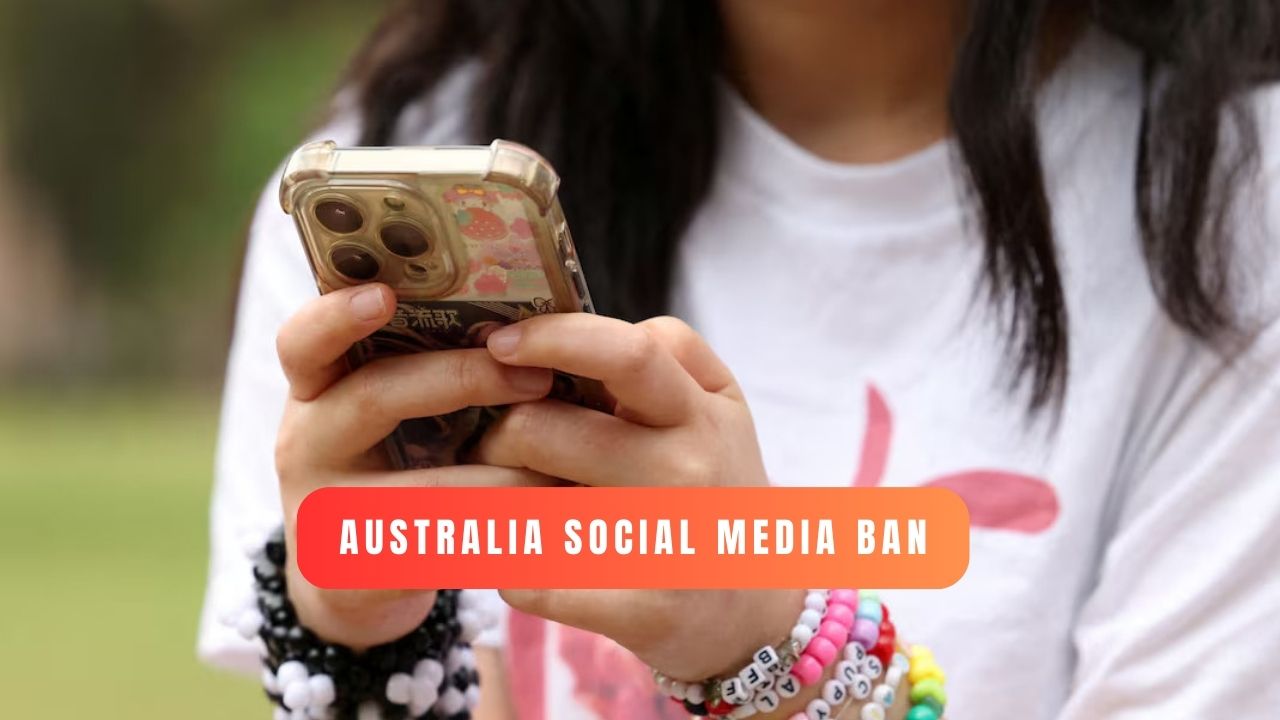
Australia social media ban: landmark decision to prohibit children under 16 from using social media platforms has ignited a worldwide debate. The new regulation, which takes effect on 10 December, is the toughest such law in existence. It has forced Big Tech companies—including Meta, TikTok, YouTube and Snapchat—to urgently redesign their compliance strategies.
For years, governments and safety advocates have accused social media giants of neglecting children’s wellbeing, prioritising profits, and avoiding accountability. Australia’s social media ban marks a dramatic shift from voluntary safety tools to compulsory enforcement, setting a precedent that global regulators are watching closely.
A Decade of Rising Concerns: From Early Optimism to Alarming Risks Australia social media ban

The Early Belief in Social Platforms
When Stephen Scheeler joined Facebook Australia in the early 2010s, the digital landscape was dominated by optimism. Social media was hailed as a tool for democratizing knowledge, fostering global community, and enabling people to create their own public squares online.
However, by the time he left in 2017, optimism had faded. Users, regulators, and even industry insiders were increasingly concerned about the unintended consequences of algorithm-driven platforms.
Why Teens Became the Focus: Australia social media ban
Teenagers form a lucrative demographic for tech companies. They spend heavily on apps, remain online longer, and provide valuable data. Yet critics argue that companies have placed revenue above safety, exposing young users to:
- Addictive algorithm loops
- Harmful beauty filters
- Cyberbullying
- Sexual exploitation
- Body image issues
- Radicalisation and misinformation
These issues built pressure on governments, pushing them to intervene.
Australia Social Media Ban: What the New Law Means
The World’s Strictest Age-Based Restriction
Australia is the first country to introduce a blanket under-16 ban with no parental permission option.
Under the new law, platforms must take “reasonable steps” to prevent underage users from having an account. Failing to do so can lead to heavy penalties—up to A$49.5 million for serious violations.
Why Australia Took This Step
Communications Minister Anika Wells argues that Big Tech had more than a decade to introduce meaningful protections and failed to act sufficiently. She believes only a strict ban can disrupt the cycle of harm.
Governments across Europe, Asia, and the Pacific have sought her advice, signalling that Australia could spark a regulatory domino effect.
Big Tech’s Reaction: Scrambling Under Pressure Australia social media ban
Public Silence, Private Lobbying
As the bill was developed, major social media companies maintained a cautious public stance.
Behind closed doors, however, intensive lobbying took place:
- Snapchat CEO Evan Spiegel held private meetings with ministers
- YouTube used high-profile children’s entertainers, The Wiggles, to advocate on its behalf
- Meta and Snap pushed for age verification to be shifted to Apple and Google
Arguments Used by Tech Companies
Tech giants have repeatedly claimed:
- A social media ban could make children less safe by pushing them to unregulated corners of the internet.
- The policy infringes on children’s rights to online access.
- Age verification technology remains unreliable.
- Parents—not governments—should decide when their children can use social media.
Despite objections, platforms know noncompliance risks substantial fines and global backlash.
A Potential Blueprint for Global Regulation: Australia social media ban
Why Other Countries Are Watching Closely
Experts say Australia’s social media ban could become a “proof of concept.” If successful, nations struggling with teen mental health crises may adopt similar rules.
Governments in:
- Denmark
- Norway
- Singapore
- Brazil
- Fiji
- Greece
- Malta
…have already expressed interest or begun drafting similar proposals. Australia’s strict enforcement model could accelerate regulatory alignment worldwide.
Lawsuits, Whistleblowers, and Mounting Evidence Against Social Media Platforms Australia social media ban
The Global Legal Landscape
A turning point in public opinion came from whistleblowers and lawsuits. In the US, a landmark trial beginning early next year consolidates hundreds of lawsuits from parents and school districts accusing Meta, TikTok, Snapchat, and YouTube of:
- Designing apps to be addictive
- Concealing known harms
- Exposing minors to dangerous content
Mark Zuckerberg and Snap CEO Evan Spiegel are expected to testify.
Internal Resistance and Ignored Warnings
Court filings revealed that Zuckerberg personally rejected a proposal to remove face-altering filters linked to eating disorders and body dysmorphia in teens.
Whistleblowers—including Frances Haugen and Arturo Béjar—testified that Meta repeatedly ignored internal recommendations to strengthen teen safety.
Meta denies wrongdoing and asserts it has consistently worked to protect young users.
How the Australia Social Media Ban Challenges the Industry
The Tech Problem: Verifying a Child’s Age
Age verification sits at the heart of the ban. Social platforms have long argued that accurately determining a user’s age is technologically difficult without violating privacy.
Still, in response to Australia’s pressure:
- YouTube is rolling out AI tools to estimate user age
- Snapchat is strengthening restrictions on accounts for users aged 13–17
- Meta introduced Instagram Teen accounts, limiting explicit content and unwanted interactions
Yet critics say these efforts fall short.
Evidence That Safety Tools Often Fail
A study led by whistleblower Arturo Béjar found that nearly two-thirds of Instagram Teen safety protections were ineffective. Children continued to face harassment, explicit content, and predatory behavior despite the new measures.
This raises concerns about whether platforms can meaningfully implement the ban—or whether they might intentionally implement weak compliance to influence regulatory outcomes in other countries.
Why Tech Companies Might Only “Half-Comply”
Analysts note that while platforms must comply with the law, they have incentives to highlight its difficulties:
- A smooth rollout could encourage more countries to adopt the same model.
- Imperfect compliance might signal that bans are unworkable.
- Costly fines may simply be absorbed as “business expenses.”
Some experts believe tech giants may deliberately test the limits of the law without fully committing to the spirit of the policy.
Parents, Experts, and Teenagers Split Over the Ban
Supporters Say: The Harm Is Too High to Ignore
Supporters argue the ban addresses years of mounting evidence linking social media to:
- Depression and anxiety
- Sleep disruption
- Cyberbullying
- Sexual exploitation
- Self-harm and suicide risks
Many parents say they feel powerless against the addictive design of platforms.
Opponents Say: The Ban Is Overreach
Some argue that:
- Teens will find loopholes
- The government is overstepping parental authority
- A ban may isolate young people from social environments
- Safe, regulated use is better than prohibition
Australia social media ban Teenagers themselves express mixed opinions. Some welcome restrictions; others feel they are being unfairly targeted.
Could the Ban Actually Make Children Less Safe?
Critics warn that banning mainstream platforms may push children toward:
- Encrypted platforms
- Dark web forums
- Unmoderated apps
- Anonymous chat services
Australia social media ban These environments may carry even higher risks than large, well-resourced platforms that at least attempt moderation.
Australian regulators argue that this concern, while valid, does not outweigh the documented harms present in today’s mainstream digital ecosystem.
How Australia Plans to Enforce the Ban: Australia social media ban
The “Reasonable Steps” Requirement
Platforms are not required to perfectly detect every underage user.
Instead, they must demonstrate they are taking reasonable measures, such as:
- Enhanced age verification
- AI-based age estimation
- Mandatory ID checks in high-risk cases
- Strict content restrictions
- Systematic removal of detected underage accounts
The regulator can issue warnings, fines, or legal action for noncompliance.
Potential Loopholes Remain
Despite these measures, enforcement challenges persist:
- Children may use VPNs
- Teens could use fake IDs
- Parent-owned devices may obscure usage
- Age estimation AI is not foolproof
Regulators insist they will refine the policy as technology evolves.
Big Tech’s Long-Term Concerns: Losing the Next Generation
Australia social media ban Teenagers represent the future user base for platforms like Instagram, TikTok, and Snapchat. If teens are locked out for years, companies may:
- Lose brand loyalty
- See declines in engagement
- Face reduced advertising revenue
- Struggle to train algorithms on youth behavior
This raises the stakes far beyond Australia.
Could This Be a Turning Point for Social Media Safety?
Industry observers describe the ban as a “seatbelt moment” for social media. Just as seatbelts were controversial at first but are now accepted as essential safety devices, strict online protections for children may become the new norm.
While the ban may not eliminate harm completely, many argue that taking action—however imperfect—is better than maintaining the status quo.
Australia social media ban An Uncertain Future for Global Digital Childhood
Australia’s social media ban for children under 16 represents one of the most aggressive regulatory moves the world has seen.
Whether it becomes a model or a cautionary tale remains to be seen.
Big Tech companies are preparing for a prolonged battle over technology, compliance, responsibility, and child safety. Governments are watching closely. Parents are divided. And teenagers—at the center of the debate—will ultimately feel the consequences most directly.
Australia social media ban What is clear is that the world has entered a new phase in the relationship between social media and society—one where governments are no longer willing to accept corporate assurances at face value. Australia’s decision marks the beginning of a complex, ongoing global policy transformation that may redefine how young people experience the internet for generations to come.
