
The Goa nightclub fire that claimed 25 lives has become one of India’s most discussed tragedies of the year. The incident not only exposed major gaps in safety compliance but also pushed the spotlight onto two previously unknown entrepreneurs whose rise had been fast, ambitious, and widely admired.
However, within hours of the fire, the Luthra brothers—Saurabh and Gaurav—fled India, triggering national outrage and an international manhunt.
This article presents a clear, neutral, and detailed news report about their background, the events that followed the tragedy, and the legal path ahead.
All information is documented in a format suitable for news readers, ensuring clarity while maintaining professional neutrality.
Early Background of the Luthra Brothers and the Lead-Up to the Goa Nightclub Fire
The story of Saurabh and Gaurav Luthra began far from the glamour associated with India’s new-age nightlife culture. The brothers were raised in a modest Delhi household, where everyday life revolved around their father’s long-term illness and their mother’s strong religious beliefs.
Neighbors described the family as polite, grounded, and respected. According to residents, the household carried an atmosphere of resilience, shaped by medical challenges and financial adjustments. After their father suffered a paralytic attack, the family opened a small boutique store to maintain stability.
Both brothers completed engineering degrees before stepping into hospitality. Their friends and early business partners often spoke about their ambition, their enthusiasm for experimentation, and their ability to network across Delhi’s growing food and nightlife market.
Rise of the Luthra Brand Before the Goa Nightclub Fire
Before their name became linked to the Goa nightclub fire, the Luthras were recognized within hospitality circles for creating youthful, energetic dining spaces that blended affordability with trend-driven experiences.
From Cafes to a National Nightlife Chain
Their business journey began in 2016 with a café in Delhi’s Hudson Lane. The place quickly attracted university students and gained popularity among younger crowds looking for stylish yet budget-friendly hangout spots. Encouraged by early success, the brothers opened Dramebaaz, another themed diner.
Their breakthrough came with Romeo Lane, an upscale nightclub that leaned heavily on ambience, curated cocktails, and themed entertainment. As the brand’s identity strengthened, Romeo Lane expanded to multiple cities including Noida, Meerut, Lucknow, and Dehradun. The brothers also launched a Dubai property.
Saurabh as the Public Face of the Brand
While both were involved in operations, Saurabh became the more visible public figure. His social media profiles showed the growth of the chain through photos of ribbon-cutting ceremonies, celebrity visits, and enthusiastic team celebrations. He was featured in Economic Times’ “40 Under 40,” followed by an appearance in Forbes India.
Gaurav maintained a quieter presence, reportedly handling internal management and finances. Despite differing roles, the brand image projected the brothers as a unified entrepreneurial force.
The opening of Birch by Romeo Lane coincided with the Goa Nightclub fire.
Birch by Romeo Lane, which opened in 2024, was designed as a premium, expansive venue positioned as a tropical escape. Located in Goa, a state known for nightlife tourism, the property was promoted as a sophisticated destination built around open spaces, water features, and aesthetic architecture.
Visitors described it as an elaborate venue with grand landscaping and wide outdoor areas. Many guests found it difficult to comprehend how such a space could become the site of a deadly fire.
However, safety concerns had surfaced earlier. Local residents raised questions about permits, construction, and environmental compliance. Authorities had also investigated noise-level violations at one of the brothers’ properties in Goa in 2024.
Furthermore, a 2023 environmental complaint accused a partner of constructing in an ecologically sensitive zone. Though the case did not directly name the brothers, it pointed toward alleged structural and waste-management issues around the business.
In November, officials closed the environmental complaint, stating that the property fell outside protected areas. Still, a cloud of regulatory concerns lingered over the brand.
The Night of the Goa Nightclub Fire
On 7 December, a massive fire broke out at Birch by Romeo Lane during evening operations. The blaze spread quickly across the premises. Chaos unfolded as staff and guests attempted to escape. Despite efforts to rescue victims, 25 people lost their lives. Several others were injured.
Authorities launched an immediate investigation into the cause of the fire, while forensic teams examined the remains of the structure. Early reports suggested possible violations in safety equipment, emergency exits, or electrical systems, though the final findings remain under review.
The tragedy left families mourning and raised serious questions about compliance standards in entertainment venues.
The Brothers’ Escape After the Goa Nightclub Fire and Public Reaction
Within hours of the fire, Saurabh and Gaurav boarded a flight to Phuket, Thailand. Their sudden departure triggered widespread criticism.
Public Outrage and International Notices
Citizens questioned why owners of the venue left the country while investigation was underway. Social media users expressed frustration, demanding answers about accountability and safety. Meanwhile, police initiated legal steps to locate the duo. Interpol notices were issued, marking the brothers as international fugitives.
In contrast, representatives for the brothers stated they did not intend to evade the law. They claimed they were distressed and being unfairly portrayed. They maintained that they were license holders, not direct operators responsible for safety systems.
Yet, the fact that they left India so quickly contributed to a narrative of avoidance, leading to increased scrutiny.
Legal Action and Initial Government Steps After the Goa Nightclub Fire
As the investigation progressed, the government ordered partial demolition of another Romeo Lane property in Vagator due to alleged encroachments. The action was taken soon after the fire.
Charges the Brothers May Face
Upon their return, the Luthras face interrogation related to:
- Culpable homicide
- Safety violations
- Licensing concerns
- Responsibility over operational practices
Their defense argues that operational control lay with local partners, not the brothers themselves. Still, investigators are reviewing ownership, management structures, and safety protocols to determine the extent of liability.
Deportation From Thailand and Return to India After the Goa Nightclub Fire
On Tuesday, Thai authorities deported the Luthra brothers. They landed in India under police supervision. Meanwhile, their business partner Ajay Gupta had already been detained in Delhi earlier.
The deportation marked the start of a detailed inquiry into the events that led to the tragedy. Authorities aim to evaluate whether warnings, complaints, or safety concerns were ignored.
The brothers maintain their innocence, expressing willingness to cooperate.
Public Perception and Media Coverage After the Goa Nightclub Fire
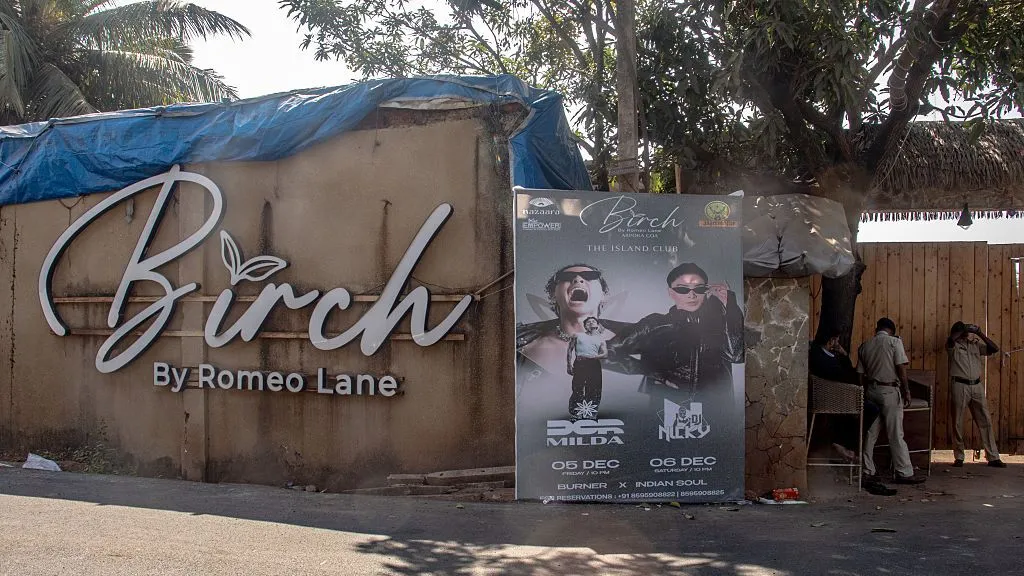
The Goa nightclub fire transformed the Luthras’ public identity in a matter of hours. Once known only within hospitality circles, their names became central to national news discussions. Television channels, newspapers, and digital media covered every development.
Their rise—from modest backgrounds to building a nightlife empire—formed a stark contrast to their current situation. The story of ambition, growth, and sudden downfall captured public attention across the country.
Residents and activists in Goa emphasized that regulatory issues around certain nightclub properties had been ongoing for years. However, the fire brought these concerns into sharper focus.
Local Concerns and Regulatory Issues Leading to the Goa Nightclub Fire
Safety standards in nightlife venues have repeatedly been debated across India. Frequent complaints include overcrowding, inadequate emergency exits, insufficient fire equipment, and improper waste management.
Earlier Complaints Against Romeo Lane Properties
Residents and activists had previously reported concerns about:
- Noise pollution
- Environmental impact
- Alleged structural violations
- Encroachment into public areas
Some cases remained under review. Others were closed based on compliance reports. Still, the repeated emergence of these issues indicates that regulatory monitoring may not have been consistent.
The Goa nightclub fire brought national attention to longstanding debates about safety enforcement.
The Future of the Investigation Into the Goa Nightclub Fire
The next phase of the case focuses on determining:
- Exact causes of the fire
- Whether safety protocols were ignored
- Operational responsibility of each stakeholder
- Structural compliance of the building
- Accountability for human loss
Authorities have stated that the investigation will remain transparent. The outcome will likely influence safety rules for entertainment venues across India.
Impact on India’s Hospitality and Nightlife Sector After the Goa Nightclub Fire
The tragedy has raised broader questions about the growth of nightlife venues across Indian cities. As restaurants and clubs expand rapidly, safety often becomes a major point of concern. Regulatory bodies may now introduce stricter protocols.
Industry experts predict:
- More frequent inspections
- Stronger penalties for violations
- Revised safety guidelines
- Mandatory emergency drills
- Better coordination between owners and local authorities
Many believe that the Goa nightclub fire will reshape how permits and compliance certificates are issued in the future.
A Turning Point After the Goa Nightclub Fire
The Goa nightclub fire has changed the course of many lives—victims, families, and the entrepreneurs behind the nightclub. As Saurabh and Gaurav Luthra return to India to face legal scrutiny, the next steps in the investigation will determine accountability.
The case highlights the delicate balance between business ambition and public safety. It also underscores the need for consistent regulation in a rapidly growing nightlife industry.
While the investigation continues, the tragedy serves as a reminder that safety standards are essential. The fire has transformed a once-celebrated entrepreneurial story into a cautionary tale still unfolding.
